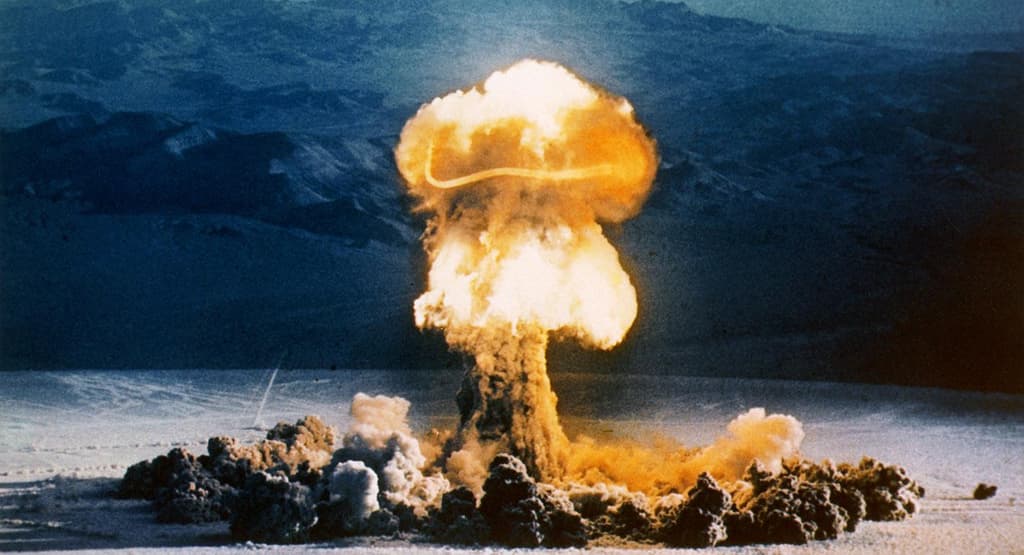
This market will resolve to "Yes" if Russia conducts a nuclear test by the listed date (ET). Otherwise, this market will resolve to "No".
A nuclear test is defined as the intentional non-combat detonation of a device by Russia that produces a nuclear chain reaction (fission or fusion), regardless of yield.
Accidents, radiological dispersal devices (bombs that spread radioactive material using conventional explosives such as "dirty bombs"), or actions by third parties will not count toward this market's resolution.
Tests not explicitly claimed by Russia may still qualify if a clear consensus of credible reporting attributes the nuclear detonation to Russia. For example, an unclaimed nuclear test analogous to the 1979 "Vela Incident" would count if credible reporting attributes it to Russia.
The resolution source for this market will be a broad consensus of credible reporting.Russia's recent activation of the Kura missile test range in Kamchatka from May 6–10, coinciding with Victory Day on May 9, signals preparations for another RS-28 Sarmat ICBM launch—a nuclear-capable intercontinental ballistic missile plagued by prior failures—but constitutes a delivery system test, not a nuclear detonation. No verified nuclear explosion has occurred since 1990 at Novaya Zemlya, despite President Putin's November 2025 order for proposals on resuming tests amid New START's February 2026 expiration and Ukraine war escalation rhetoric. The Comprehensive Nuclear-Test-Ban Treaty Organization recently warned both Russia and the US of rising risks, with traders weighing symbolic saber-rattling against structural barriers like international monitoring and retaliation concerns. Upcoming diplomatic talks or Ukraine frontline shifts could influence probabilities.
This market will resolve to "Yes" if Russia conducts a nuclear test by the listed date (ET). Otherwise, this market will resolve to "No".
A nuclear test is defined as the intentional non-combat detonation of a device by Russia that produces a nuclear chain reaction (fission or fusion), regardless of yield.
Accidents, radiological dispersal devices (bombs that spread radioactive material using conventional explosives such as "dirty bombs"), or actions by third parties will not count toward this market's resolution.
Tests not explicitly claimed by Russia may still qualify if a clear consensus of credible reporting attributes the nuclear detonation to Russia. For example, an unclaimed nuclear test analogous to the 1979 "Vela Incident" would count if credible reporting attributes it to Russia.
The resolution source for this market will be a broad consensus of credible reporting.
This market will resolve to "Yes" if Russia conducts a nuclear test by the listed date (ET). Otherwise, this market will resolve to "No".
A nuclear test is defined as the intentional non-combat detonation of a device by Russia that produces a nuclear chain reaction (fission or fusion), regardless of yield.
Accidents, radiological dispersal devices (bombs that spread radioactive material using conventional explosives such as "dirty bombs"), or actions by third parties will not count toward this market's resolution.
Tests not explicitly claimed by Russia may still qualify if a clear consensus of credible reporting attributes the nuclear detonation to Russia. For example, an unclaimed nuclear test analogous to the 1979 "Vela Incident" would count if credible reporting attributes it to Russia.
The resolution source for this market will be a broad consensus of credible reporting.
Russia's recent activation of the Kura missile test range in Kamchatka from May 6–10, coinciding with Victory Day on May 9, signals preparations for another RS-28 Sarmat ICBM launch—a nuclear-capable intercontinental ballistic missile plagued by prior failures—but constitutes a delivery system test, not a nuclear detonation. No verified nuclear explosion has occurred since 1990 at Novaya Zemlya, despite President Putin's November 2025 order for proposals on resuming tests amid New START's February 2026 expiration and Ukraine war escalation rhetoric. The Comprehensive Nuclear-Test-Ban Treaty Organization recently warned both Russia and the US of rising risks, with traders weighing symbolic saber-rattling against structural barriers like international monitoring and retaliation concerns. Upcoming diplomatic talks or Ukraine frontline shifts could influence probabilities.
Ringkasan eksperimental yang dihasilkan AI dengan referensi data Polymarket. Ini bukan saran trading dan tidak berperan dalam bagaimana pasar ini diselesaikan. · Diperbarui
May 6 2026
Kyiv Post reports Russia is preparing a “doomsday” Sarmat ICBM test around Victory Day, yet satellite‑track data show the launch was scrubbed, reinforcing market belief that no
December 31, 2026 dips to 8%4%
Kyiv Post reports Russia is preparing a “doomsday” Sarmat ICBM test around Victory Day, yet satellite‑track data show the launch was scrubbed, reinforcing market belief that no nuclear blast will occur
May 6 2026
Russian Defence Ministry announces a scheduled ICBM‑capable missile test at the Kura range (May 6‑10), explicitly stating it is not a nuclear test, further dampening expectations
September 30, 2026 dips to 4%1%
Russian Defence Ministry announces a scheduled ICBM‑capable missile test at the Kura range (May 6‑10), explicitly stating it is not a nuclear test, further dampening expectations
May 4 2026
Polymarket analysis notes that, despite Yars drills and bomber patrols, there is “absent CTBTO seismic data” and “Kremlin restraint statements,” further depressing the
December 31, 2026 drops to 4%5%
Polymarket analysis notes that, despite Yars drills and bomber patrols, there is “absent CTBTO seismic data” and “Kremlin restraint statements,” further depressing the test‑probability outlook
May 1 2026
Congressional Research Service report reiterates that Russia’s “modernization” is hampered by failed tests and that the New START treaty has just expired – The report underscored
September 30, 2026 dips to 6%2%
Congressional Research Service report reiterates that Russia’s “modernization” is hampered by failed tests and that the New START treaty has just expired – The report underscored that, despite the treaty’s lapse, Russia publicly pledged to continue abiding by its limits, reinforcing trader sentiment that a test was unlikely before Sept 30.
May 1 2026
U.S. Congress receives the 2026 Annual Threat Assessment stating Russia has suffered “multiple failed tests of new systems,” reinforcing expectations of continued test moratorium
December 31, 2026 dips to 9%1%
U.S. Congress receives the 2026 Annual Threat Assessment stating Russia has suffered “multiple failed tests of new systems,” reinforcing expectations of continued test moratorium
Apr 30 2026
The Russian‑held Zaporizhzhia nuclear plant loses external power for an hour on the 40th anniversary of Chernobyl, raising safety concerns but providing no evidence of a test
December 31, 2026 dips to 10%2%
The Russian‑held Zaporizhzhia nuclear plant loses external power for an hour on the 40th anniversary of Chernobyl, raising safety concerns but providing no evidence of a test
Apr 30 2026
Russian Defense Ministry reports successful training completion of Yars missile system driver-mechanics arriving for service
Routine personnel training for nuclear-capable missile systems indicated ongoing readiness but no test, supporting low market probabilities.
Apr 30 2026
IAEA Director‑General Rafael Grossi warns that any nuclear test by Russia (or the U.S.) would spark a cascade of worldwide testing – The UN‑backed warning amplified concerns about
September 30, 2026 dips to 8%1%
IAEA Director‑General Rafael Grossi warns that any nuclear test by Russia (or the U.S.) would spark a cascade of worldwide testing – The UN‑backed warning amplified concerns about escalation, leading markets to further discount the probability of a Russian test in the near term.
Apr 30 2026
IAEA Director‑General Rafael Grossi warns that if Russia (or the U.S.) resumes nuclear testing, other nations will follow, heightening concerns about a test‑free period
September 30, 2026 dips to 5%1%
IAEA Director‑General Rafael Grossi warns that if Russia (or the U.S.) resumes nuclear testing, other nations will follow, heightening concerns about a test‑free period
Apr 30 2026
Russian Ministry of Defense announces missile‑test window at the Kura range in Kamchatka from May 6‑10, but explicitly states the tests are “conventional” and no nuclear devices
December 31, 2026 dips to 12%1%
Russian Ministry of Defense announces missile‑test window at the Kura range in Kamchatka from May 6‑10, but explicitly states the tests are “conventional” and no nuclear devices will be used
Apr 27 2026
Russian forces launch massive missile and drone strikes against Ukraine, including attacks near the Zaporizhzhia nuclear plant
Escalation in conventional strikes near nuclear sites raised concerns but no nuclear test occurred, maintaining low test probability.
Apr 22 2026
Congressional Research Service report cites the 2026 Annual Threat Assessment confirming Russia’s “multiple failed tests” of new systems, reinforcing market doubts
September 30, 2026 dips to 6%3%
Congressional Research Service report cites the 2026 Annual Threat Assessment confirming Russia’s “multiple failed tests” of new systems, reinforcing market doubts
Apr 21 2026
UN chief Rafael Grossi and CTBTO executive Robert Floyd warn that a Russian nuclear test would trigger a “spiral” of further tests, underscoring Kremlin restraint
Apr 18 2026
Russian Foreign Ministry publicly rejects any possibility of using nuclear weapons in Ukraine – The statement was interpreted as a broader signal of restraint on nuclear
September 30, 2026 dips to 6%3%
Russian Foreign Ministry publicly rejects any possibility of using nuclear weapons in Ukraine – The statement was interpreted as a broader signal of restraint on nuclear activities, contributing to the continued decline in the “Yes”
Apr 2 2026
Russian Strategic Missile Forces conduct large-scale drills in Siberia involving Yars intercontinental ballistic missiles capable of carrying nuclear warheads
June 30, 2026 plunges to 2%48%
Russia held major nuclear missile drills with Yars ICBMs, demonstrating nuclear readiness and signaling deterrence without conducting nuclear tests, contributing to a sharp drop in test probability.
Apr 2 2026
Russia conducts Yars ICBM drills in Siberia, but no warhead‑test activity is reported
December 31, 2026 plunges to 12%38%
Russia conducts Yars ICBM drills in Siberia, but no warhead‑test activity is reported
Mar 28 2026
U.S. intelligence briefing flags “multiple failed tests” of new Russian nuclear systems, prompting traders to slash the perceived likelihood of a test before the September deadline
September 30, 2026 plunges to 9%42%
U.S. intelligence briefing flags “multiple failed tests” of new Russian nuclear systems, prompting traders to slash the perceived likelihood of a test before the September deadline
Mar 15 2026
U.S. intelligence briefing flags “multiple failed tests” of new Russian nuclear systems – A March testimony cited in the 2026 Annual Threat Assessment warned that Russia’s recent
September 30, 2026 plunges to 9%42%
U.S. intelligence briefing flags “multiple failed tests” of new Russian nuclear systems – A March testimony cited in the 2026 Annual Threat Assessment warned that Russia’s recent attempts at modernizing its arsenal had repeatedly failed, prompting traders to slash the perceived likelihood of a test before the end‑September deadline.
Mar 15 2026
U.S. intelligence briefing flags “multiple failed tests” of new Russian nuclear systems in its 2026 Annual Threat Assessment, noting repeated launch failures and no confirmed
December 31, 2026 drops to 38%12%
U.S. intelligence briefing flags “multiple failed tests” of new Russian nuclear systems in its 2026 Annual Threat Assessment, noting repeated launch failures and no confirmed detonation
This market will resolve to "Yes" if Russia conducts a nuclear test by the listed date (ET). Otherwise, this market will resolve to "No".
A nuclear test is defined as the intentional non-combat detonation of a device by Russia that produces a nuclear chain reaction (fission or fusion), regardless of yield.
Accidents, radiological dispersal devices (bombs that spread radioactive material using conventional explosives such as "dirty bombs"), or actions by third parties will not count toward this market's resolution.
Tests not explicitly claimed by Russia may still qualify if a clear consensus of credible reporting attributes the nuclear detonation to Russia. For example, an unclaimed nuclear test analogous to the 1979 "Vela Incident" would count if credible reporting attributes it to Russia.
The resolution source for this market will be a broad consensus of credible reporting.Russia's recent activation of the Kura missile test range in Kamchatka from May 6–10, coinciding with Victory Day on May 9, signals preparations for another RS-28 Sarmat ICBM launch—a nuclear-capable intercontinental ballistic missile plagued by prior failures—but constitutes a delivery system test, not a nuclear detonation. No verified nuclear explosion has occurred since 1990 at Novaya Zemlya, despite President Putin's November 2025 order for proposals on resuming tests amid New START's February 2026 expiration and Ukraine war escalation rhetoric. The Comprehensive Nuclear-Test-Ban Treaty Organization recently warned both Russia and the US of rising risks, with traders weighing symbolic saber-rattling against structural barriers like international monitoring and retaliation concerns. Upcoming diplomatic talks or Ukraine frontline shifts could influence probabilities.
This market will resolve to "Yes" if Russia conducts a nuclear test by the listed date (ET). Otherwise, this market will resolve to "No".
A nuclear test is defined as the intentional non-combat detonation of a device by Russia that produces a nuclear chain reaction (fission or fusion), regardless of yield.
Accidents, radiological dispersal devices (bombs that spread radioactive material using conventional explosives such as "dirty bombs"), or actions by third parties will not count toward this market's resolution.
Tests not explicitly claimed by Russia may still qualify if a clear consensus of credible reporting attributes the nuclear detonation to Russia. For example, an unclaimed nuclear test analogous to the 1979 "Vela Incident" would count if credible reporting attributes it to Russia.
The resolution source for this market will be a broad consensus of credible reporting.
This market will resolve to "Yes" if Russia conducts a nuclear test by the listed date (ET). Otherwise, this market will resolve to "No".
A nuclear test is defined as the intentional non-combat detonation of a device by Russia that produces a nuclear chain reaction (fission or fusion), regardless of yield.
Accidents, radiological dispersal devices (bombs that spread radioactive material using conventional explosives such as "dirty bombs"), or actions by third parties will not count toward this market's resolution.
Tests not explicitly claimed by Russia may still qualify if a clear consensus of credible reporting attributes the nuclear detonation to Russia. For example, an unclaimed nuclear test analogous to the 1979 "Vela Incident" would count if credible reporting attributes it to Russia.
The resolution source for this market will be a broad consensus of credible reporting.
Russia's recent activation of the Kura missile test range in Kamchatka from May 6–10, coinciding with Victory Day on May 9, signals preparations for another RS-28 Sarmat ICBM launch—a nuclear-capable intercontinental ballistic missile plagued by prior failures—but constitutes a delivery system test, not a nuclear detonation. No verified nuclear explosion has occurred since 1990 at Novaya Zemlya, despite President Putin's November 2025 order for proposals on resuming tests amid New START's February 2026 expiration and Ukraine war escalation rhetoric. The Comprehensive Nuclear-Test-Ban Treaty Organization recently warned both Russia and the US of rising risks, with traders weighing symbolic saber-rattling against structural barriers like international monitoring and retaliation concerns. Upcoming diplomatic talks or Ukraine frontline shifts could influence probabilities.
Ringkasan eksperimental yang dihasilkan AI dengan referensi data Polymarket. Ini bukan saran trading dan tidak berperan dalam bagaimana pasar ini diselesaikan. · Diperbarui
May 6 2026
Kyiv Post reports Russia is preparing a “doomsday” Sarmat ICBM test around Victory Day, yet satellite‑track data show the launch was scrubbed, reinforcing market belief that no
December 31, 2026 dips to 8%4%
Kyiv Post reports Russia is preparing a “doomsday” Sarmat ICBM test around Victory Day, yet satellite‑track data show the launch was scrubbed, reinforcing market belief that no nuclear blast will occur
May 6 2026
Russian Defence Ministry announces a scheduled ICBM‑capable missile test at the Kura range (May 6‑10), explicitly stating it is not a nuclear test, further dampening expectations
September 30, 2026 dips to 4%1%
Russian Defence Ministry announces a scheduled ICBM‑capable missile test at the Kura range (May 6‑10), explicitly stating it is not a nuclear test, further dampening expectations
May 4 2026
Polymarket analysis notes that, despite Yars drills and bomber patrols, there is “absent CTBTO seismic data” and “Kremlin restraint statements,” further depressing the
December 31, 2026 drops to 4%5%
Polymarket analysis notes that, despite Yars drills and bomber patrols, there is “absent CTBTO seismic data” and “Kremlin restraint statements,” further depressing the test‑probability outlook
May 1 2026
Congressional Research Service report reiterates that Russia’s “modernization” is hampered by failed tests and that the New START treaty has just expired – The report underscored
September 30, 2026 dips to 6%2%
Congressional Research Service report reiterates that Russia’s “modernization” is hampered by failed tests and that the New START treaty has just expired – The report underscored that, despite the treaty’s lapse, Russia publicly pledged to continue abiding by its limits, reinforcing trader sentiment that a test was unlikely before Sept 30.
May 1 2026
U.S. Congress receives the 2026 Annual Threat Assessment stating Russia has suffered “multiple failed tests of new systems,” reinforcing expectations of continued test moratorium
December 31, 2026 dips to 9%1%
U.S. Congress receives the 2026 Annual Threat Assessment stating Russia has suffered “multiple failed tests of new systems,” reinforcing expectations of continued test moratorium
Apr 30 2026
The Russian‑held Zaporizhzhia nuclear plant loses external power for an hour on the 40th anniversary of Chernobyl, raising safety concerns but providing no evidence of a test
December 31, 2026 dips to 10%2%
The Russian‑held Zaporizhzhia nuclear plant loses external power for an hour on the 40th anniversary of Chernobyl, raising safety concerns but providing no evidence of a test
Apr 30 2026
Russian Defense Ministry reports successful training completion of Yars missile system driver-mechanics arriving for service
Routine personnel training for nuclear-capable missile systems indicated ongoing readiness but no test, supporting low market probabilities.
Apr 30 2026
IAEA Director‑General Rafael Grossi warns that any nuclear test by Russia (or the U.S.) would spark a cascade of worldwide testing – The UN‑backed warning amplified concerns about
September 30, 2026 dips to 8%1%
IAEA Director‑General Rafael Grossi warns that any nuclear test by Russia (or the U.S.) would spark a cascade of worldwide testing – The UN‑backed warning amplified concerns about escalation, leading markets to further discount the probability of a Russian test in the near term.
Apr 30 2026
IAEA Director‑General Rafael Grossi warns that if Russia (or the U.S.) resumes nuclear testing, other nations will follow, heightening concerns about a test‑free period
September 30, 2026 dips to 5%1%
IAEA Director‑General Rafael Grossi warns that if Russia (or the U.S.) resumes nuclear testing, other nations will follow, heightening concerns about a test‑free period
Apr 30 2026
Russian Ministry of Defense announces missile‑test window at the Kura range in Kamchatka from May 6‑10, but explicitly states the tests are “conventional” and no nuclear devices
December 31, 2026 dips to 12%1%
Russian Ministry of Defense announces missile‑test window at the Kura range in Kamchatka from May 6‑10, but explicitly states the tests are “conventional” and no nuclear devices will be used
Apr 27 2026
Russian forces launch massive missile and drone strikes against Ukraine, including attacks near the Zaporizhzhia nuclear plant
Escalation in conventional strikes near nuclear sites raised concerns but no nuclear test occurred, maintaining low test probability.
Apr 22 2026
Congressional Research Service report cites the 2026 Annual Threat Assessment confirming Russia’s “multiple failed tests” of new systems, reinforcing market doubts
September 30, 2026 dips to 6%3%
Congressional Research Service report cites the 2026 Annual Threat Assessment confirming Russia’s “multiple failed tests” of new systems, reinforcing market doubts
Apr 21 2026
UN chief Rafael Grossi and CTBTO executive Robert Floyd warn that a Russian nuclear test would trigger a “spiral” of further tests, underscoring Kremlin restraint
Apr 18 2026
Russian Foreign Ministry publicly rejects any possibility of using nuclear weapons in Ukraine – The statement was interpreted as a broader signal of restraint on nuclear
September 30, 2026 dips to 6%3%
Russian Foreign Ministry publicly rejects any possibility of using nuclear weapons in Ukraine – The statement was interpreted as a broader signal of restraint on nuclear activities, contributing to the continued decline in the “Yes”
Apr 2 2026
Russian Strategic Missile Forces conduct large-scale drills in Siberia involving Yars intercontinental ballistic missiles capable of carrying nuclear warheads
June 30, 2026 plunges to 2%48%
Russia held major nuclear missile drills with Yars ICBMs, demonstrating nuclear readiness and signaling deterrence without conducting nuclear tests, contributing to a sharp drop in test probability.
Apr 2 2026
Russia conducts Yars ICBM drills in Siberia, but no warhead‑test activity is reported
December 31, 2026 plunges to 12%38%
Russia conducts Yars ICBM drills in Siberia, but no warhead‑test activity is reported
Mar 28 2026
U.S. intelligence briefing flags “multiple failed tests” of new Russian nuclear systems, prompting traders to slash the perceived likelihood of a test before the September deadline
September 30, 2026 plunges to 9%42%
U.S. intelligence briefing flags “multiple failed tests” of new Russian nuclear systems, prompting traders to slash the perceived likelihood of a test before the September deadline
Mar 15 2026
U.S. intelligence briefing flags “multiple failed tests” of new Russian nuclear systems – A March testimony cited in the 2026 Annual Threat Assessment warned that Russia’s recent
September 30, 2026 plunges to 9%42%
U.S. intelligence briefing flags “multiple failed tests” of new Russian nuclear systems – A March testimony cited in the 2026 Annual Threat Assessment warned that Russia’s recent attempts at modernizing its arsenal had repeatedly failed, prompting traders to slash the perceived likelihood of a test before the end‑September deadline.
Mar 15 2026
U.S. intelligence briefing flags “multiple failed tests” of new Russian nuclear systems in its 2026 Annual Threat Assessment, noting repeated launch failures and no confirmed
December 31, 2026 drops to 38%12%
U.S. intelligence briefing flags “multiple failed tests” of new Russian nuclear systems in its 2026 Annual Threat Assessment, noting repeated launch failures and no confirmed detonation
Hati-hati dengan link eksternal.
Pertanyaan yang Sering Diajukan
"Uji coba nuklir Rusia oleh...?" adalah pasar prediksi di Polymarket dengan 6 hasil yang mungkin di mana trader membeli dan menjual saham berdasarkan apa yang mereka yakini akan terjadi. Hasil terdepan saat ini adalah "31 Desember 2026" di 8%, diikuti oleh "30 September 2026" di 5%. Harga mencerminkan probabilitas crowd-sourced real-time. Misalnya, saham yang dihargai 8¢ menyiratkan bahwa pasar secara kolektif memberikan peluang 8% pada hasil tersebut. Peluang ini bergeser terus-menerus saat trader bereaksi terhadap perkembangan dan informasi baru. Saham dengan hasil yang benar bisa ditukarkan seharga $1 setiap saham saat pasar diselesaikan.
Per hari ini, "Uji coba nuklir Rusia oleh...?" telah menghasilkan $1.4 million dalam total volume trading sejak pasar diluncurkan pada Nov 5, 2025. Tingkat aktivitas trading ini mencerminkan keterlibatan kuat dari komunitas Polymarket dan membantu memastikan bahwa peluang saat ini diinformasikan oleh kumpulan besar peserta pasar. Kamu bisa melacak pergerakan harga langsung dan trading di hasil apa pun langsung di halaman ini.
Untuk trading di "Uji coba nuklir Rusia oleh...?," jelajahi 6 hasil yang tersedia di halaman ini. Setiap hasil menampilkan harga saat ini yang mewakili probabilitas tersirat pasar. Untuk mengambil posisi, pilih hasil yang menurutmu paling mungkin, pilih "Ya" untuk mendukungnya atau "Tidak" untuk menentangnya, masukkan jumlahmu, dan klik "Trade." Jika hasil pilihanmu benar saat pasar diselesaikan, saham "Ya" kamu membayar $1 masing-masing. Jika salah, mereka membayar $0. Kamu juga bisa menjual sahammu kapan saja sebelum resolusi jika kamu ingin mengamankan keuntungan atau memotong kerugian.
Ini adalah pasar yang sangat terbuka. Pemimpin saat ini untuk "Uji coba nuklir Rusia oleh...?" adalah "31 Desember 2026" di hanya 8%, dengan "30 September 2026" mengejar ketat di 5%. Tanpa hasil yang menguasai mayoritas kuat, trader melihat ini sebagai sangat tidak pasti, yang bisa menghadirkan peluang trading unik. Peluang ini diperbarui secara real-time, jadi tandai halaman ini untuk menyaksikan bagaimana probabilitas berkembang.
Aturan resolusi untuk "Uji coba nuklir Rusia oleh...?" mendefinisikan dengan tepat apa yang harus terjadi agar setiap hasil dinyatakan sebagai pemenang — termasuk sumber data resmi yang digunakan untuk menentukan hasilnya. Kamu bisa meninjau kriteria resolusi lengkap di bagian "Aturan" di halaman ini di atas komentar. Kami menyarankan membaca aturan dengan cermat sebelum trading, karena mereka menentukan kondisi tepat, kasus khusus, dan sumber yang mengatur bagaimana pasar ini diselesaikan.
Ya. Kamu tidak perlu trading untuk tetap terinformasi. Halaman ini berfungsi sebagai pelacak langsung untuk "Uji coba nuklir Rusia oleh...?." Probabilitas hasil diperbarui secara real-time saat trade baru masuk. Kamu bisa menandai halaman ini dan memeriksa bagian komentar untuk melihat apa yang dikatakan trader lain. Kamu juga bisa menggunakan filter rentang waktu pada grafik untuk melihat bagaimana peluang bergeser seiring waktu. Ini jendela real-time gratis tentang apa yang diharapkan pasar.
Peluang Polymarket ditetapkan oleh trader nyata yang menaruh uang nyata di balik keyakinan mereka, yang cenderung menghasilkan prediksi yang akurat. Dengan $1.4 million diperdagangkan pada "Uji coba nuklir Rusia oleh...?," harga-harga ini mengumpulkan pengetahuan dan keyakinan kolektif dari ribuan peserta — sering kali mengalahkan jajak pendapat, prakiraan ahli, dan survei tradisional. Pasar prediksi seperti Polymarket memiliki rekam jejak akurasi yang kuat, terutama saat event mendekati tanggal resolusinya. Misalnya, Polymarket memiliki skor akurasi satu bulan sebesar 94%. Untuk statistik terbaru tentang akurasi prediksi Polymarket, kunjungi halaman akurasi di Polymarket.
Untuk melakukan trade pertamamu di "Uji coba nuklir Rusia oleh...?," daftar akun Polymarket gratis dan isi dengan crypto, kartu kredit atau debit, atau transfer bank. Setelah akunmu terisi, kembali ke halaman ini, pilih hasil yang ingin kamu trading, masukkan jumlahmu, dan klik "Trade." Jika kamu baru di pasar prediksi, klik link "Cara kerjanya" di bagian atas halaman Polymarket mana pun untuk panduan langkah demi langkah tentang cara trading.
Di Polymarket, harga setiap hasil mewakili probabilitas tersirat pasar. Harga 8¢ untuk "31 Desember 2026" di pasar "Uji coba nuklir Rusia oleh...?" berarti trader secara kolektif percaya ada sekitar peluang 8% bahwa "31 Desember 2026" akan menjadi hasil yang benar. Jika kamu membeli saham "Ya" di 8¢ dan hasilnya benar, kamu menerima $1,00 per saham — keuntungan 92¢ per saham. Jika salah, saham tersebut bernilai $0.
Tanggal berakhir pasar "Uji coba nuklir Rusia oleh...?" telah lewat, tetapi pasar belum diselesaikan secara resmi. Tanggal berakhir menunjukkan kapan event yang mendasarinya diperkirakan terjadi atau dapat diketahui. Ini bukan saat trading berhenti. Pasar tetap terbuka untuk trading sampai hasilnya diselesaikan secara resmi melalui proses resolusi. Kamu masih bisa membeli, menjual, atau menutup posisimu saat pasar menunggu resolusi. Periksa pelacak status resolusi dan bagian "Aturan" di halaman ini untuk pembaruan tentang jadwal resolusi.
Pasar "Uji coba nuklir Rusia oleh...?" memiliki diskusi yang berkembang dengan 7 komentar di mana trader berbagi analisis, memperdebatkan hasil, dan membahas perkembangan terkini. Scroll ke bawah ke bagian komentar untuk membaca apa yang dipikirkan peserta lain. Kamu juga bisa memfilter berdasarkan "Top Holder" untuk melihat posisi trader terbesar pasar, atau periksa tab "Aktivitas" untuk feed real-time dari trade.
Polymarket adalah pasar prediksi terbesar di dunia, di mana kamu bisa tetap terinformasi dan mendapatkan keuntungan dari pengetahuanmu tentang event dunia nyata. Trader membeli dan menjual saham pada hasil untuk topik mulai dari politik dan pemilu hingga crypto, keuangan, olahraga, teknologi, dan budaya, termasuk pasar seperti "Uji coba nuklir Rusia oleh...?." Harga mencerminkan probabilitas crowd-sourced real-time yang didukung oleh keyakinan finansial, sering kali memberikan sinyal yang lebih cepat dan lebih akurat daripada jajak pendapat, pakar, atau survei tradisional.
Hati-hati dengan link eksternal.
Pertanyaan yang Sering Diajukan