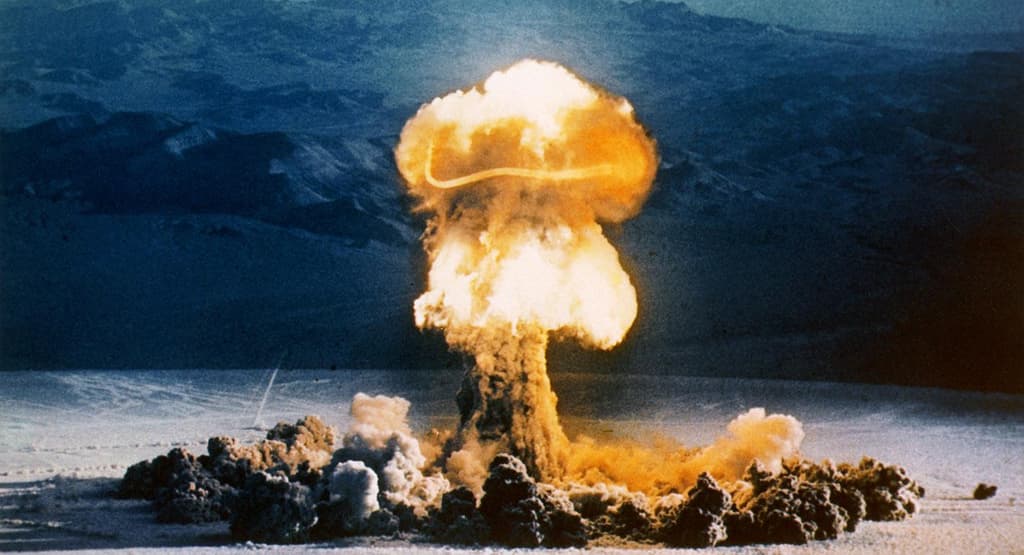
This market will resolve to "Yes" if Russia conducts a nuclear test by the listed date (ET). Otherwise, this market will resolve to "No".
A nuclear test is defined as the intentional non-combat detonation of a device by Russia that produces a nuclear chain reaction (fission or fusion), regardless of yield.
Accidents, radiological dispersal devices (bombs that spread radioactive material using conventional explosives such as "dirty bombs"), or actions by third parties will not count toward this market's resolution.
Tests not explicitly claimed by Russia may still qualify if a clear consensus of credible reporting attributes the nuclear detonation to Russia. For example, an unclaimed nuclear test analogous to the 1979 "Vela Incident" would count if credible reporting attributes it to Russia.
The resolution source for this market will be a broad consensus of credible reporting.Russia's ongoing nuclear-capable missile tests at the Kura range, conducted from May 6-10 ahead of Victory Day on May 9, have not triggered market shifts, as traders distinguish these from actual nuclear detonation tests last performed in 1990. Low implied probabilities—8% for a test by December 31, 2026—reflect Russia's 2023 CTBT ratification withdrawal, November 2025 order to prepare test proposals at Novaya Zemlya, and February 2026 New START expiry, yet persistent de facto global test ban adherence amid Ukraine escalations. April Sarmat ICBM trials and Pentagon's May 1 nuclear arsenal report sustain modernization signals without crossing to explosive testing, facing diplomatic barriers from U.S., NATO sanctions, and international norms. Any verified detonation or arms control breakdown could rapidly alter trader consensus.
This market will resolve to "Yes" if Russia conducts a nuclear test by the listed date (ET). Otherwise, this market will resolve to "No".
A nuclear test is defined as the intentional non-combat detonation of a device by Russia that produces a nuclear chain reaction (fission or fusion), regardless of yield.
Accidents, radiological dispersal devices (bombs that spread radioactive material using conventional explosives such as "dirty bombs"), or actions by third parties will not count toward this market's resolution.
Tests not explicitly claimed by Russia may still qualify if a clear consensus of credible reporting attributes the nuclear detonation to Russia. For example, an unclaimed nuclear test analogous to the 1979 "Vela Incident" would count if credible reporting attributes it to Russia.
The resolution source for this market will be a broad consensus of credible reporting.
This market will resolve to "Yes" if Russia conducts a nuclear test by the listed date (ET). Otherwise, this market will resolve to "No".
A nuclear test is defined as the intentional non-combat detonation of a device by Russia that produces a nuclear chain reaction (fission or fusion), regardless of yield.
Accidents, radiological dispersal devices (bombs that spread radioactive material using conventional explosives such as "dirty bombs"), or actions by third parties will not count toward this market's resolution.
Tests not explicitly claimed by Russia may still qualify if a clear consensus of credible reporting attributes the nuclear detonation to Russia. For example, an unclaimed nuclear test analogous to the 1979 "Vela Incident" would count if credible reporting attributes it to Russia.
The resolution source for this market will be a broad consensus of credible reporting.
Russia's ongoing nuclear-capable missile tests at the Kura range, conducted from May 6-10 ahead of Victory Day on May 9, have not triggered market shifts, as traders distinguish these from actual nuclear detonation tests last performed in 1990. Low implied probabilities—8% for a test by December 31, 2026—reflect Russia's 2023 CTBT ratification withdrawal, November 2025 order to prepare test proposals at Novaya Zemlya, and February 2026 New START expiry, yet persistent de facto global test ban adherence amid Ukraine escalations. April Sarmat ICBM trials and Pentagon's May 1 nuclear arsenal report sustain modernization signals without crossing to explosive testing, facing diplomatic barriers from U.S., NATO sanctions, and international norms. Any verified detonation or arms control breakdown could rapidly alter trader consensus.
Tóm tắt AI thử nghiệm tham chiếu dữ liệu Polymarket. Đây không phải tư vấn giao dịch và không ảnh hưởng đến cách thị trường này được giải quyết. · Cập nhật
May 6 2026
Kyiv Post reports Russia is preparing a “doomsday” Sarmat ICBM test around Victory Day, yet satellite‑track data show the launch was scrubbed, reinforcing market belief that no
December 31, 2026 dips to 8%4%
Kyiv Post reports Russia is preparing a “doomsday” Sarmat ICBM test around Victory Day, yet satellite‑track data show the launch was scrubbed, reinforcing market belief that no nuclear blast will occur
May 6 2026
Russian Defence Ministry announces a scheduled ICBM‑capable missile test at the Kura range (May 6‑10), explicitly stating it is not a nuclear test, further dampening expectations
September 30, 2026 dips to 4%1%
Russian Defence Ministry announces a scheduled ICBM‑capable missile test at the Kura range (May 6‑10), explicitly stating it is not a nuclear test, further dampening expectations
May 4 2026
Polymarket analysis notes that, despite Yars drills and bomber patrols, there is “absent CTBTO seismic data” and “Kremlin restraint statements,” further depressing the
December 31, 2026 drops to 4%5%
Polymarket analysis notes that, despite Yars drills and bomber patrols, there is “absent CTBTO seismic data” and “Kremlin restraint statements,” further depressing the test‑probability outlook
May 1 2026
Congressional Research Service report reiterates that Russia’s “modernization” is hampered by failed tests and that the New START treaty has just expired – The report underscored
September 30, 2026 dips to 6%2%
Congressional Research Service report reiterates that Russia’s “modernization” is hampered by failed tests and that the New START treaty has just expired – The report underscored that, despite the treaty’s lapse, Russia publicly pledged to continue abiding by its limits, reinforcing trader sentiment that a test was unlikely before Sept 30.
May 1 2026
U.S. Congress receives the 2026 Annual Threat Assessment stating Russia has suffered “multiple failed tests of new systems,” reinforcing expectations of continued test moratorium
December 31, 2026 dips to 9%1%
U.S. Congress receives the 2026 Annual Threat Assessment stating Russia has suffered “multiple failed tests of new systems,” reinforcing expectations of continued test moratorium
Apr 30 2026
The Russian‑held Zaporizhzhia nuclear plant loses external power for an hour on the 40th anniversary of Chernobyl, raising safety concerns but providing no evidence of a test
December 31, 2026 dips to 10%2%
The Russian‑held Zaporizhzhia nuclear plant loses external power for an hour on the 40th anniversary of Chernobyl, raising safety concerns but providing no evidence of a test
Apr 30 2026
Russian Defense Ministry reports successful training completion of Yars missile system driver-mechanics arriving for service
Routine personnel training for nuclear-capable missile systems indicated ongoing readiness but no test, supporting low market probabilities.
Apr 30 2026
IAEA Director‑General Rafael Grossi warns that any nuclear test by Russia (or the U.S.) would spark a cascade of worldwide testing – The UN‑backed warning amplified concerns about
September 30, 2026 dips to 8%1%
IAEA Director‑General Rafael Grossi warns that any nuclear test by Russia (or the U.S.) would spark a cascade of worldwide testing – The UN‑backed warning amplified concerns about escalation, leading markets to further discount the probability of a Russian test in the near term.
Apr 30 2026
IAEA Director‑General Rafael Grossi warns that if Russia (or the U.S.) resumes nuclear testing, other nations will follow, heightening concerns about a test‑free period
September 30, 2026 dips to 5%1%
IAEA Director‑General Rafael Grossi warns that if Russia (or the U.S.) resumes nuclear testing, other nations will follow, heightening concerns about a test‑free period
Apr 30 2026
Russian Ministry of Defense announces missile‑test window at the Kura range in Kamchatka from May 6‑10, but explicitly states the tests are “conventional” and no nuclear devices
December 31, 2026 dips to 12%1%
Russian Ministry of Defense announces missile‑test window at the Kura range in Kamchatka from May 6‑10, but explicitly states the tests are “conventional” and no nuclear devices will be used
Apr 27 2026
Russian forces launch massive missile and drone strikes against Ukraine, including attacks near the Zaporizhzhia nuclear plant
Escalation in conventional strikes near nuclear sites raised concerns but no nuclear test occurred, maintaining low test probability.
Apr 22 2026
Congressional Research Service report cites the 2026 Annual Threat Assessment confirming Russia’s “multiple failed tests” of new systems, reinforcing market doubts
September 30, 2026 dips to 6%3%
Congressional Research Service report cites the 2026 Annual Threat Assessment confirming Russia’s “multiple failed tests” of new systems, reinforcing market doubts
Apr 21 2026
UN chief Rafael Grossi and CTBTO executive Robert Floyd warn that a Russian nuclear test would trigger a “spiral” of further tests, underscoring Kremlin restraint
Apr 18 2026
Russian Foreign Ministry publicly rejects any possibility of using nuclear weapons in Ukraine – The statement was interpreted as a broader signal of restraint on nuclear
September 30, 2026 dips to 6%3%
Russian Foreign Ministry publicly rejects any possibility of using nuclear weapons in Ukraine – The statement was interpreted as a broader signal of restraint on nuclear activities, contributing to the continued decline in the “Yes”
Apr 2 2026
Russian Strategic Missile Forces conduct large-scale drills in Siberia involving Yars intercontinental ballistic missiles capable of carrying nuclear warheads
June 30, 2026 plunges to 2%48%
Russia held major nuclear missile drills with Yars ICBMs, demonstrating nuclear readiness and signaling deterrence without conducting nuclear tests, contributing to a sharp drop in test probability.
Apr 2 2026
Russia conducts Yars ICBM drills in Siberia, but no warhead‑test activity is reported
December 31, 2026 plunges to 12%38%
Russia conducts Yars ICBM drills in Siberia, but no warhead‑test activity is reported
Mar 28 2026
U.S. intelligence briefing flags “multiple failed tests” of new Russian nuclear systems, prompting traders to slash the perceived likelihood of a test before the September deadline
September 30, 2026 plunges to 9%42%
U.S. intelligence briefing flags “multiple failed tests” of new Russian nuclear systems, prompting traders to slash the perceived likelihood of a test before the September deadline
Mar 15 2026
U.S. intelligence briefing flags “multiple failed tests” of new Russian nuclear systems – A March testimony cited in the 2026 Annual Threat Assessment warned that Russia’s recent
September 30, 2026 plunges to 9%42%
U.S. intelligence briefing flags “multiple failed tests” of new Russian nuclear systems – A March testimony cited in the 2026 Annual Threat Assessment warned that Russia’s recent attempts at modernizing its arsenal had repeatedly failed, prompting traders to slash the perceived likelihood of a test before the end‑September deadline.
Mar 15 2026
U.S. intelligence briefing flags “multiple failed tests” of new Russian nuclear systems in its 2026 Annual Threat Assessment, noting repeated launch failures and no confirmed
December 31, 2026 drops to 38%12%
U.S. intelligence briefing flags “multiple failed tests” of new Russian nuclear systems in its 2026 Annual Threat Assessment, noting repeated launch failures and no confirmed detonation
This market will resolve to "Yes" if Russia conducts a nuclear test by the listed date (ET). Otherwise, this market will resolve to "No".
A nuclear test is defined as the intentional non-combat detonation of a device by Russia that produces a nuclear chain reaction (fission or fusion), regardless of yield.
Accidents, radiological dispersal devices (bombs that spread radioactive material using conventional explosives such as "dirty bombs"), or actions by third parties will not count toward this market's resolution.
Tests not explicitly claimed by Russia may still qualify if a clear consensus of credible reporting attributes the nuclear detonation to Russia. For example, an unclaimed nuclear test analogous to the 1979 "Vela Incident" would count if credible reporting attributes it to Russia.
The resolution source for this market will be a broad consensus of credible reporting.Russia's ongoing nuclear-capable missile tests at the Kura range, conducted from May 6-10 ahead of Victory Day on May 9, have not triggered market shifts, as traders distinguish these from actual nuclear detonation tests last performed in 1990. Low implied probabilities—8% for a test by December 31, 2026—reflect Russia's 2023 CTBT ratification withdrawal, November 2025 order to prepare test proposals at Novaya Zemlya, and February 2026 New START expiry, yet persistent de facto global test ban adherence amid Ukraine escalations. April Sarmat ICBM trials and Pentagon's May 1 nuclear arsenal report sustain modernization signals without crossing to explosive testing, facing diplomatic barriers from U.S., NATO sanctions, and international norms. Any verified detonation or arms control breakdown could rapidly alter trader consensus.
This market will resolve to "Yes" if Russia conducts a nuclear test by the listed date (ET). Otherwise, this market will resolve to "No".
A nuclear test is defined as the intentional non-combat detonation of a device by Russia that produces a nuclear chain reaction (fission or fusion), regardless of yield.
Accidents, radiological dispersal devices (bombs that spread radioactive material using conventional explosives such as "dirty bombs"), or actions by third parties will not count toward this market's resolution.
Tests not explicitly claimed by Russia may still qualify if a clear consensus of credible reporting attributes the nuclear detonation to Russia. For example, an unclaimed nuclear test analogous to the 1979 "Vela Incident" would count if credible reporting attributes it to Russia.
The resolution source for this market will be a broad consensus of credible reporting.
This market will resolve to "Yes" if Russia conducts a nuclear test by the listed date (ET). Otherwise, this market will resolve to "No".
A nuclear test is defined as the intentional non-combat detonation of a device by Russia that produces a nuclear chain reaction (fission or fusion), regardless of yield.
Accidents, radiological dispersal devices (bombs that spread radioactive material using conventional explosives such as "dirty bombs"), or actions by third parties will not count toward this market's resolution.
Tests not explicitly claimed by Russia may still qualify if a clear consensus of credible reporting attributes the nuclear detonation to Russia. For example, an unclaimed nuclear test analogous to the 1979 "Vela Incident" would count if credible reporting attributes it to Russia.
The resolution source for this market will be a broad consensus of credible reporting.
Russia's ongoing nuclear-capable missile tests at the Kura range, conducted from May 6-10 ahead of Victory Day on May 9, have not triggered market shifts, as traders distinguish these from actual nuclear detonation tests last performed in 1990. Low implied probabilities—8% for a test by December 31, 2026—reflect Russia's 2023 CTBT ratification withdrawal, November 2025 order to prepare test proposals at Novaya Zemlya, and February 2026 New START expiry, yet persistent de facto global test ban adherence amid Ukraine escalations. April Sarmat ICBM trials and Pentagon's May 1 nuclear arsenal report sustain modernization signals without crossing to explosive testing, facing diplomatic barriers from U.S., NATO sanctions, and international norms. Any verified detonation or arms control breakdown could rapidly alter trader consensus.
Tóm tắt AI thử nghiệm tham chiếu dữ liệu Polymarket. Đây không phải tư vấn giao dịch và không ảnh hưởng đến cách thị trường này được giải quyết. · Cập nhật
May 6 2026
Kyiv Post reports Russia is preparing a “doomsday” Sarmat ICBM test around Victory Day, yet satellite‑track data show the launch was scrubbed, reinforcing market belief that no
December 31, 2026 dips to 8%4%
Kyiv Post reports Russia is preparing a “doomsday” Sarmat ICBM test around Victory Day, yet satellite‑track data show the launch was scrubbed, reinforcing market belief that no nuclear blast will occur
May 6 2026
Russian Defence Ministry announces a scheduled ICBM‑capable missile test at the Kura range (May 6‑10), explicitly stating it is not a nuclear test, further dampening expectations
September 30, 2026 dips to 4%1%
Russian Defence Ministry announces a scheduled ICBM‑capable missile test at the Kura range (May 6‑10), explicitly stating it is not a nuclear test, further dampening expectations
May 4 2026
Polymarket analysis notes that, despite Yars drills and bomber patrols, there is “absent CTBTO seismic data” and “Kremlin restraint statements,” further depressing the
December 31, 2026 drops to 4%5%
Polymarket analysis notes that, despite Yars drills and bomber patrols, there is “absent CTBTO seismic data” and “Kremlin restraint statements,” further depressing the test‑probability outlook
May 1 2026
Congressional Research Service report reiterates that Russia’s “modernization” is hampered by failed tests and that the New START treaty has just expired – The report underscored
September 30, 2026 dips to 6%2%
Congressional Research Service report reiterates that Russia’s “modernization” is hampered by failed tests and that the New START treaty has just expired – The report underscored that, despite the treaty’s lapse, Russia publicly pledged to continue abiding by its limits, reinforcing trader sentiment that a test was unlikely before Sept 30.
May 1 2026
U.S. Congress receives the 2026 Annual Threat Assessment stating Russia has suffered “multiple failed tests of new systems,” reinforcing expectations of continued test moratorium
December 31, 2026 dips to 9%1%
U.S. Congress receives the 2026 Annual Threat Assessment stating Russia has suffered “multiple failed tests of new systems,” reinforcing expectations of continued test moratorium
Apr 30 2026
The Russian‑held Zaporizhzhia nuclear plant loses external power for an hour on the 40th anniversary of Chernobyl, raising safety concerns but providing no evidence of a test
December 31, 2026 dips to 10%2%
The Russian‑held Zaporizhzhia nuclear plant loses external power for an hour on the 40th anniversary of Chernobyl, raising safety concerns but providing no evidence of a test
Apr 30 2026
Russian Defense Ministry reports successful training completion of Yars missile system driver-mechanics arriving for service
Routine personnel training for nuclear-capable missile systems indicated ongoing readiness but no test, supporting low market probabilities.
Apr 30 2026
IAEA Director‑General Rafael Grossi warns that any nuclear test by Russia (or the U.S.) would spark a cascade of worldwide testing – The UN‑backed warning amplified concerns about
September 30, 2026 dips to 8%1%
IAEA Director‑General Rafael Grossi warns that any nuclear test by Russia (or the U.S.) would spark a cascade of worldwide testing – The UN‑backed warning amplified concerns about escalation, leading markets to further discount the probability of a Russian test in the near term.
Apr 30 2026
IAEA Director‑General Rafael Grossi warns that if Russia (or the U.S.) resumes nuclear testing, other nations will follow, heightening concerns about a test‑free period
September 30, 2026 dips to 5%1%
IAEA Director‑General Rafael Grossi warns that if Russia (or the U.S.) resumes nuclear testing, other nations will follow, heightening concerns about a test‑free period
Apr 30 2026
Russian Ministry of Defense announces missile‑test window at the Kura range in Kamchatka from May 6‑10, but explicitly states the tests are “conventional” and no nuclear devices
December 31, 2026 dips to 12%1%
Russian Ministry of Defense announces missile‑test window at the Kura range in Kamchatka from May 6‑10, but explicitly states the tests are “conventional” and no nuclear devices will be used
Apr 27 2026
Russian forces launch massive missile and drone strikes against Ukraine, including attacks near the Zaporizhzhia nuclear plant
Escalation in conventional strikes near nuclear sites raised concerns but no nuclear test occurred, maintaining low test probability.
Apr 22 2026
Congressional Research Service report cites the 2026 Annual Threat Assessment confirming Russia’s “multiple failed tests” of new systems, reinforcing market doubts
September 30, 2026 dips to 6%3%
Congressional Research Service report cites the 2026 Annual Threat Assessment confirming Russia’s “multiple failed tests” of new systems, reinforcing market doubts
Apr 21 2026
UN chief Rafael Grossi and CTBTO executive Robert Floyd warn that a Russian nuclear test would trigger a “spiral” of further tests, underscoring Kremlin restraint
Apr 18 2026
Russian Foreign Ministry publicly rejects any possibility of using nuclear weapons in Ukraine – The statement was interpreted as a broader signal of restraint on nuclear
September 30, 2026 dips to 6%3%
Russian Foreign Ministry publicly rejects any possibility of using nuclear weapons in Ukraine – The statement was interpreted as a broader signal of restraint on nuclear activities, contributing to the continued decline in the “Yes”
Apr 2 2026
Russian Strategic Missile Forces conduct large-scale drills in Siberia involving Yars intercontinental ballistic missiles capable of carrying nuclear warheads
June 30, 2026 plunges to 2%48%
Russia held major nuclear missile drills with Yars ICBMs, demonstrating nuclear readiness and signaling deterrence without conducting nuclear tests, contributing to a sharp drop in test probability.
Apr 2 2026
Russia conducts Yars ICBM drills in Siberia, but no warhead‑test activity is reported
December 31, 2026 plunges to 12%38%
Russia conducts Yars ICBM drills in Siberia, but no warhead‑test activity is reported
Mar 28 2026
U.S. intelligence briefing flags “multiple failed tests” of new Russian nuclear systems, prompting traders to slash the perceived likelihood of a test before the September deadline
September 30, 2026 plunges to 9%42%
U.S. intelligence briefing flags “multiple failed tests” of new Russian nuclear systems, prompting traders to slash the perceived likelihood of a test before the September deadline
Mar 15 2026
U.S. intelligence briefing flags “multiple failed tests” of new Russian nuclear systems – A March testimony cited in the 2026 Annual Threat Assessment warned that Russia’s recent
September 30, 2026 plunges to 9%42%
U.S. intelligence briefing flags “multiple failed tests” of new Russian nuclear systems – A March testimony cited in the 2026 Annual Threat Assessment warned that Russia’s recent attempts at modernizing its arsenal had repeatedly failed, prompting traders to slash the perceived likelihood of a test before the end‑September deadline.
Mar 15 2026
U.S. intelligence briefing flags “multiple failed tests” of new Russian nuclear systems in its 2026 Annual Threat Assessment, noting repeated launch failures and no confirmed
December 31, 2026 drops to 38%12%
U.S. intelligence briefing flags “multiple failed tests” of new Russian nuclear systems in its 2026 Annual Threat Assessment, noting repeated launch failures and no confirmed detonation
Cẩn thận với liên kết bên ngoài.
Câu hỏi thường gặp
"Thử nghiệm hạt nhân của Nga bởi...?" là thị trường dự đoán trên Polymarket với 6 kết quả có thể nơi các nhà giao dịch mua và bán cổ phần dựa trên điều họ tin sẽ xảy ra. Kết quả dẫn đầu hiện tại là "31 tháng 12, 2026" ở mức 8%, tiếp theo là "Ngày 30 tháng 9 năm 2026" ở mức 5%. Giá phản ánh xác suất cộng đồng theo thời gian thực. Ví dụ, cổ phần ở giá 8¢ ngụ ý thị trường tập thể cho rằng có 8% khả năng cho kết quả đó. Tỷ lệ này thay đổi liên tục khi trader phản ứng với diễn biến và thông tin mới. Cổ phần đúng kết quả có thể đổi lấy $1 mỗi cổ phần khi thị trường được giải quyết.
Tính đến hôm nay, "Thử nghiệm hạt nhân của Nga bởi...?" đã tạo $1.4 million tổng khối lượng giao dịch kể từ khi thị trường mở vào Nov 5, 2025. Mức hoạt động giao dịch này phản ánh sự tham gia mạnh mẽ từ cộng đồng Polymarket và giúp đảm bảo tỷ lệ hiện tại được thông tin bởi nhóm người tham gia thị trường sâu rộng. Bạn có thể theo dõi biến động giá trực tiếp và giao dịch trên bất kỳ kết quả nào ngay trên trang này.
Để giao dịch trên "Thử nghiệm hạt nhân của Nga bởi...?," duyệt 6 kết quả có sẵn trên trang này. Mỗi kết quả hiển thị giá hiện tại đại diện cho xác suất ngụ ý của thị trường. Để mở vị thế, chọn kết quả bạn tin là có khả năng nhất, chọn "Có" để giao dịch ủng hộ hoặc "Không" để giao dịch chống, nhập số tiền và nhấn "Giao dịch." Nếu kết quả bạn chọn đúng khi thị trường giải quyết, cổ phần "Có" của bạn trả $1 mỗi cổ phần. Nếu sai, chúng trả $0. Bạn cũng có thể bán cổ phần bất cứ lúc nào trước khi giải quyết nếu muốn chốt lời hoặc cắt lỗ.
Đây là thị trường mở rộng. Người dẫn đầu hiện tại cho "Thử nghiệm hạt nhân của Nga bởi...?" là "31 tháng 12, 2026" chỉ ở mức 8%, với "Ngày 30 tháng 9 năm 2026" sát đằng sau ở 5%. Không kết quả nào chiếm đa số mạnh, trader xem đây là rất không chắc chắn, có thể tạo cơ hội giao dịch độc đáo. Tỷ lệ cập nhật theo thời gian thực, vì vậy đánh dấu trang này để xem xác suất phát triển.
Quy tắc giải quyết cho "Thử nghiệm hạt nhân của Nga bởi...?" định nghĩa chính xác điều gì cần xảy ra để mỗi kết quả được tuyên bố thắng — bao gồm nguồn dữ liệu chính thức được sử dụng để xác định kết quả. Bạn có thể xem tiêu chí giải quyết đầy đủ trong phần "Quy tắc" trên trang này phía trên bình luận. Chúng tôi khuyên đọc kỹ quy tắc trước khi giao dịch, vì chúng chỉ rõ điều kiện, trường hợp ngoại lệ và nguồn chính xác quản lý cách thị trường được thanh toán.
Có. Bạn không cần giao dịch để cập nhật thông tin. Trang này đóng vai trò theo dõi trực tiếp cho "Thử nghiệm hạt nhân của Nga bởi...?." Xác suất kết quả cập nhật theo thời gian thực khi có giao dịch mới. Bạn có thể đánh dấu trang này và kiểm tra phần bình luận để xem trader khác đang nói gì. Bạn cũng có thể sử dụng bộ lọc khoảng thời gian trên biểu đồ để xem tỷ lệ đã thay đổi thế nào. Đây là cửa sổ miễn phí, thời gian thực vào điều thị trường kỳ vọng sẽ xảy ra.
Tỷ lệ Polymarket được đặt bởi trader thực đặt tiền thực đằng sau niềm tin, có xu hướng đưa ra dự đoán chính xác. Với $1.4 million được giao dịch trên "Thử nghiệm hạt nhân của Nga bởi...?," giá này tổng hợp kiến thức và niềm tin tập thể của hàng nghìn người tham gia — thường vượt trội hơn thăm dò, dự báo chuyên gia và khảo sát truyền thống. Thị trường dự đoán như Polymarket có thành tích chính xác mạnh, đặc biệt khi sự kiện tiến gần ngày giải quyết. Ví dụ, Polymarket có điểm chính xác một tháng là 94%. Để biết thống kê mới nhất về độ chính xác dự đoán của Polymarket, truy cập trang độ chính xác trên Polymarket.
Để đặt lệnh đầu tiên trên "Thử nghiệm hạt nhân của Nga bởi...?," đăng ký tài khoản Polymarket miễn phí và nạp tiền bằng crypto, thẻ tín dụng hoặc ghi nợ, hoặc chuyển khoản ngân hàng. Khi tài khoản đã được nạp, quay lại trang này, chọn kết quả bạn muốn giao dịch, nhập số tiền và nhấn "Giao dịch." Nếu bạn mới với thị trường dự đoán, nhấn liên kết "Cách hoạt động" ở đầu bất kỳ trang Polymarket nào để xem hướng dẫn từng bước nhanh về cách giao dịch.
Trên Polymarket, giá của mỗi kết quả đại diện cho xác suất ngụ ý của thị trường. Giá 8¢ cho "31 tháng 12, 2026" trong thị trường "Thử nghiệm hạt nhân của Nga bởi...?" nghĩa là trader tập thể tin rằng có khoảng 8% khả năng "31 tháng 12, 2026" sẽ là kết quả đúng. Nếu bạn mua cổ phần "Có" ở 8¢ và kết quả đúng, bạn nhận $1.00 mỗi cổ phần — lợi nhuận 92¢ mỗi cổ phần. Nếu sai, cổ phần đó giá trị $0.
Ngày kết thúc dự kiến của thị trường "Thử nghiệm hạt nhân của Nga bởi...?" đã qua, nhưng thị trường chưa được giải quyết chính thức. Ngày kết thúc cho biết khi nào sự kiện cơ sở dự kiến xảy ra hoặc có thể biết được. Đó không phải lúc giao dịch dừng. Thị trường vẫn mở giao dịch cho đến khi kết quả được giải quyết chính thức qua quy trình giải quyết. Bạn vẫn có thể mua, bán hoặc đóng vị thế trong khi thị trường đang chờ giải quyết. Kiểm tra theo dõi trạng thái giải quyết và phần "Quy tắc" trên trang này để cập nhật.
Thị trường "Thử nghiệm hạt nhân của Nga bởi...?" có cuộc thảo luận đang phát triển với 7 bình luận nơi trader chia sẻ phân tích, tranh luận kết quả và thảo luận diễn biến mới nhất. Cuộn xuống phần bình luận bên dưới để đọc ý kiến từ người tham gia khác. Bạn cũng có thể lọc theo "Người nắm giữ hàng đầu" để xem trader lớn nhất đang đặt cược vào đâu, hoặc kiểm tra tab "Hoạt động" cho dữ liệu giao dịch theo thời gian thực.
Polymarket là thị trường dự đoán lớn nhất thế giới, nơi bạn có thể cập nhật thông tin và kiếm lợi nhuận từ kiến thức về sự kiện thực tế. Trader mua và bán cổ phần trên kết quả cho các chủ đề từ chính trị và bầu cử đến crypto, tài chính, thể thao, công nghệ và văn hoá, bao gồm các thị trường như "Thử nghiệm hạt nhân của Nga bởi...?." Giá phản ánh xác suất cộng đồng theo thời gian thực được hỗ trợ bởi niềm tin tài chính, thường cung cấp tín hiệu nhanh và chính xác hơn thăm dò, bình luận viên hoặc khảo sát truyền thống.
Cẩn thận với liên kết bên ngoài.
Câu hỏi thường gặp