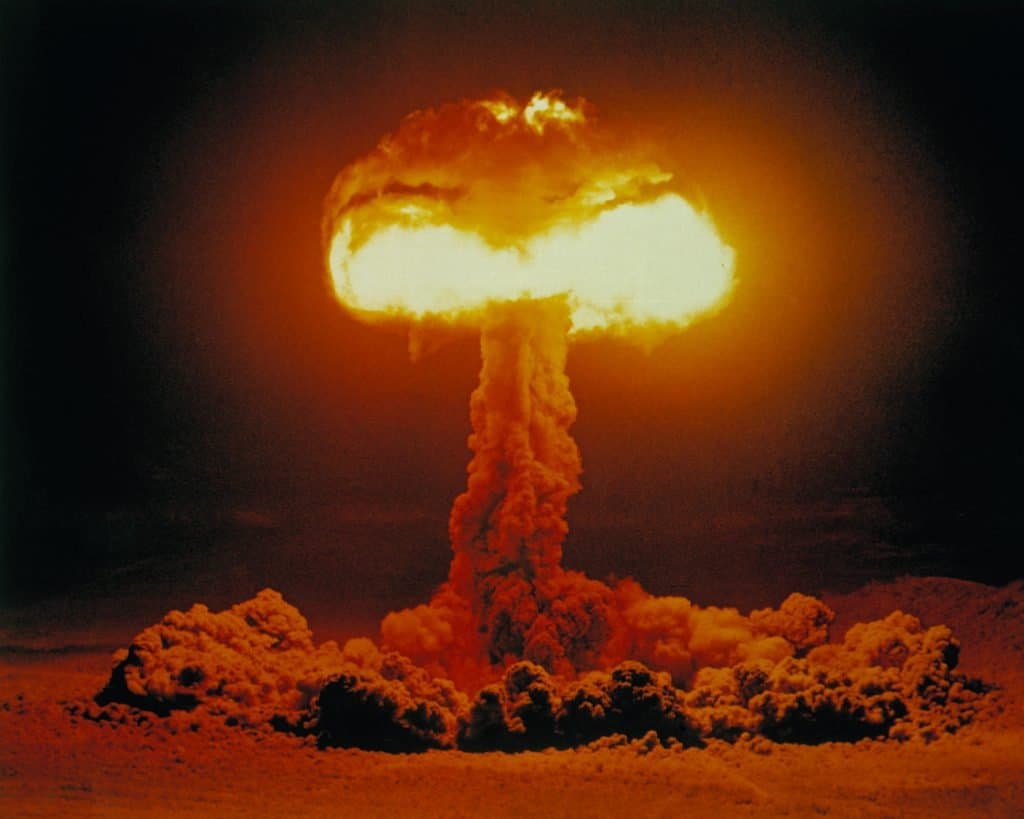
**President Trump’s October 2025 directive to resume nuclear weapons testing “on an equal basis” with Russia and China sparked the market, but subsequent clarifications and technical realities have kept implied probabilities low.** The U.S. has maintained a voluntary moratorium on yield-producing explosive tests since 1992, relying instead on the Stockpile Stewardship Program. Administration officials quickly signaled that references to “testing” likely encompassed non-explosive activities such as delivery system flights, subcritical experiments, or enhanced stockpile surveillance rather than full-yield detonations at the Nevada National Security Site. Technical assessments from the National Nuclear Security Administration and congressional reports indicate that preparing for an underground explosive test would require 24–36 months under current readiness plans, with regulatory, environmental, and safety hurdles potentially extending that timeline further. As of mid-2026, no such test has occurred, and U.S. compliance reporting continues to highlight concerns over Russian and Chinese activities without triggering an immediate U.S. response. Market pricing for a test by December 31, 2026, reflects these barriers alongside diplomatic and domestic political considerations that could delay or redirect any decision. Upcoming factors that could shift sentiment include FY2027 budget and National Defense Authorization Act outcomes, any new presidential statements on testing policy, or verified escalations in foreign testing programs.
Polymarketデータを参照したAI生成の実験的な要約。これは取引アドバイスではなく、このマーケットの解決方法には一切関係ありません。 · 更新日$669,980 Vol.
2026年6月30日
1%
2026年9月30日
5%
2026年12月31日
9%
$669,980 Vol.
2026年6月30日
1%
2026年9月30日
5%
2026年12月31日
9%
A nuclear test is defined as the intentional non-combat detonation of a device by the US that produces a nuclear chain reaction (fission or fusion), regardless of yield.
Accidents, radiological dispersal devices (bombs that spread radioactive material using conventional explosives such as "dirty bombs"), or actions by third parties will not count toward this market's resolution.
Tests not explicitly claimed by US may still qualify if a clear consensus of credible reporting attributes the nuclear detonation to US. For example, an unclaimed nuclear test analogous to the 1979 "Vela Incident" would count if credible reporting attributes it to the US.
The resolution source for this market will be a broad consensus of credible reporting.
マーケット開始日: Mar 31, 2026, 3:32 PM ET
Resolver
0x65070BE91...A nuclear test is defined as the intentional non-combat detonation of a device by the US that produces a nuclear chain reaction (fission or fusion), regardless of yield.
Accidents, radiological dispersal devices (bombs that spread radioactive material using conventional explosives such as "dirty bombs"), or actions by third parties will not count toward this market's resolution.
Tests not explicitly claimed by US may still qualify if a clear consensus of credible reporting attributes the nuclear detonation to US. For example, an unclaimed nuclear test analogous to the 1979 "Vela Incident" would count if credible reporting attributes it to the US.
The resolution source for this market will be a broad consensus of credible reporting.
Resolver
0x65070BE91...**President Trump’s October 2025 directive to resume nuclear weapons testing “on an equal basis” with Russia and China sparked the market, but subsequent clarifications and technical realities have kept implied probabilities low.** The U.S. has maintained a voluntary moratorium on yield-producing explosive tests since 1992, relying instead on the Stockpile Stewardship Program. Administration officials quickly signaled that references to “testing” likely encompassed non-explosive activities such as delivery system flights, subcritical experiments, or enhanced stockpile surveillance rather than full-yield detonations at the Nevada National Security Site. Technical assessments from the National Nuclear Security Administration and congressional reports indicate that preparing for an underground explosive test would require 24–36 months under current readiness plans, with regulatory, environmental, and safety hurdles potentially extending that timeline further. As of mid-2026, no such test has occurred, and U.S. compliance reporting continues to highlight concerns over Russian and Chinese activities without triggering an immediate U.S. response. Market pricing for a test by December 31, 2026, reflects these barriers alongside diplomatic and domestic political considerations that could delay or redirect any decision. Upcoming factors that could shift sentiment include FY2027 budget and National Defense Authorization Act outcomes, any new presidential statements on testing policy, or verified escalations in foreign testing programs.
Polymarketデータを参照したAI生成の実験的な要約。これは取引アドバイスではなく、このマーケットの解決方法には一切関係ありません。 · 更新日
外部リンクに注意してください。
外部リンクに注意してください。
よくある質問