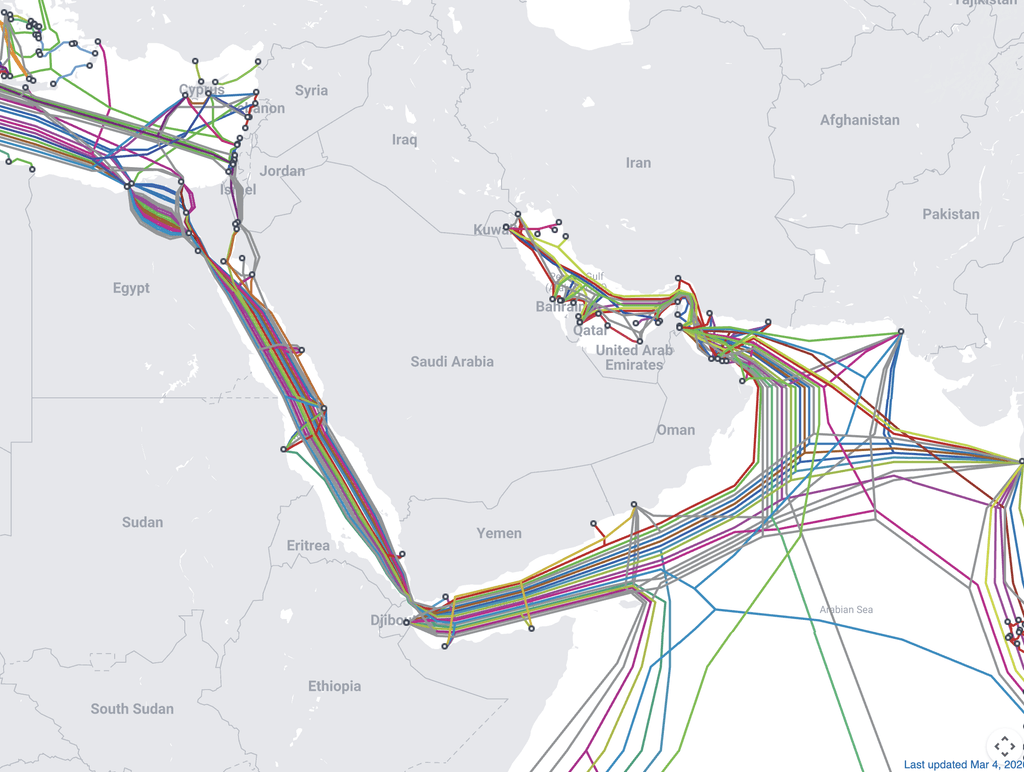
Amid heightened US-Iran tensions and reports of Iranian threats in late March 2026 to target undersea cables in the Strait of Hormuz and Red Sea—carrying up to 97% of global data traffic—no verified sabotage has materialized over the past three weeks, bolstering trader consensus at 96.5% for "No" by April 30. Fact-checks have debunked claims of imminent action or Iranian control over key infrastructure, while strategic deterrence prevails: deliberate cuts would sever Tehran's own connectivity and provoke swift US, UK, and French naval retaliation from regional fleets. Historical precedents like accidental Red Sea damages underscore high execution risks without confirmed intent. Late escalations, such as direct strikes or proxy attacks, remain the primary scenarios that could shift odds in the final days.
Riepilogo sperimentale generato dall'AI con riferimento ai dati di Polymarket. Questo non è un consiglio di trading e non ha alcun ruolo nella risoluzione di questo mercato. · AggiornatoL'Iran saboterà i cavi internet sottomarini entro il 30 aprile?
L'Iran saboterà i cavi internet sottomarini entro il 30 aprile?
Sì
$96,659 Vol.
$96,659 Vol.
Sì
$96,659 Vol.
$96,659 Vol.
Only actions that cause physical damage to the undersea internet cable infrastructure, e.g., physical sabotage, such as cutting, dragging, or explosive attacks, will be considered. Cyber attacks will not qualify, even if they have kinetic effects.
Qualifying incidents must occur in the region spanning the Persian Gulf, Strait of Hormuz, Gulf of Oman, Arabian Sea, Gulf of Aden, and Red Sea, including areas surrounding the Arabian Peninsula.
Attempted attacks that do not result in damage, or actions that are intercepted or fail to impact the cables, will not qualify for a "Yes" resolution.
Incidents which are broadly attributed to Iranian forces or Iranian-aligned groups will qualify regardless of the absence of definitive evidence or official Iranian denials.
The resolution source will be a consensus of credible reporting.
Mercato aperto: Mar 23, 2026, 6:23 PM ET
Resolver
0x65070BE91...Only actions that cause physical damage to the undersea internet cable infrastructure, e.g., physical sabotage, such as cutting, dragging, or explosive attacks, will be considered. Cyber attacks will not qualify, even if they have kinetic effects.
Qualifying incidents must occur in the region spanning the Persian Gulf, Strait of Hormuz, Gulf of Oman, Arabian Sea, Gulf of Aden, and Red Sea, including areas surrounding the Arabian Peninsula.
Attempted attacks that do not result in damage, or actions that are intercepted or fail to impact the cables, will not qualify for a "Yes" resolution.
Incidents which are broadly attributed to Iranian forces or Iranian-aligned groups will qualify regardless of the absence of definitive evidence or official Iranian denials.
The resolution source will be a consensus of credible reporting.
Resolver
0x65070BE91...Amid heightened US-Iran tensions and reports of Iranian threats in late March 2026 to target undersea cables in the Strait of Hormuz and Red Sea—carrying up to 97% of global data traffic—no verified sabotage has materialized over the past three weeks, bolstering trader consensus at 96.5% for "No" by April 30. Fact-checks have debunked claims of imminent action or Iranian control over key infrastructure, while strategic deterrence prevails: deliberate cuts would sever Tehran's own connectivity and provoke swift US, UK, and French naval retaliation from regional fleets. Historical precedents like accidental Red Sea damages underscore high execution risks without confirmed intent. Late escalations, such as direct strikes or proxy attacks, remain the primary scenarios that could shift odds in the final days.
Riepilogo sperimentale generato dall'AI con riferimento ai dati di Polymarket. Questo non è un consiglio di trading e non ha alcun ruolo nella risoluzione di questo mercato. · Aggiornato
Fai attenzione ai link esterni.
Fai attenzione ai link esterni.
Domande frequenti