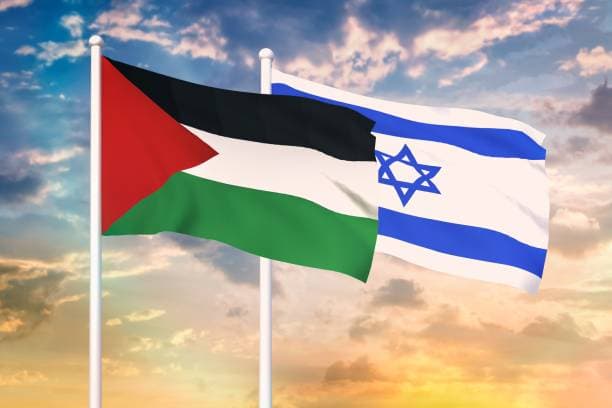
Recent Cairo meetings on April 2-3 between a Hamas delegation led by Khalil al-Hayya and UN envoy Nikolay Mladenov centered on Phase II of the Gaza ceasefire, which requires Hamas disarmament, full Israeli troop withdrawal, technocratic Palestinian administration, and reconstruction under a US-led Board of Peace per the Trump administration's 20-point plan. Hamas refused disarmament discussions without prior Israeli fulfillment of Phase I obligations, including withdrawal guarantees, stalling progress despite mediators' fresh proposals. Ongoing IDF strikes on Hamas cells underscore ceasefire fragility, driving trader consensus toward delayed resolution amid diplomatic dead ends and potential resumed indirect talks in Cairo or Doha.
Résumé expérimental généré par IA à partir des données Polymarket · Mis à jour$2,701,484 Vol.
31 mars 2026
30 juin
15%
$2,701,484 Vol.
30 juin
$444,982 Vol.
15%
On October 8, an agreement on an initial ceasefire (Phase 1) was announced, constituting a halt in fighting, a partial Israeli pullback to a “yellow line,” prisoner swaps, expanded aid, and the release of hostages. A second phase of the deal, yet to be negotiated, is expected to address further Israeli withdrawal, Hamas’s disarmament, and the establishment of new security and governance arrangements in Gaza.
This market will resolve to "Yes" if an official agreement for the second phase of the Israel–Hamas ceasefire, defined as a publicly announced mutual agreement, is reached between Israel and Hamas by June 30, 2026, 11:59 PM ET. Otherwise, this market will resolve to “No”.
If the agreement is officially reached before the resolution date, this market will resolve to "Yes," regardless of if/when the agreement goes into effect.
For purposes of this market, a “second phase” ceasefire agreement refers to a deal publicly acknowledged by both Israel and Hamas (directly or via recognized mediators such as the U.S., Egypt, or Qatar) that goes beyond the Phase 1 initial truce and includes commitments towards a comprehensive or “full” ceasefire. Any agreement that is publicly described by the parties, or by mediators on their behalf, as the completion of “Phase 2” of the ceasefire will qualify, regardless of whether it includes further Israeli withdrawals beyond the “yellow line,” or agreements by Hamas to disarm.
An extension or continuation of the Phase 1 arrangement alone will not qualify.
This market's resolution will be based on official announcements from both Israel and Hamas, however a wide consensus of credible media reporting will also qualify.On October 8, an agreement on an initial ceasefire (Phase 1) was announced, constituting a halt in fighting, a partial Israeli pullback to a “yellow line,” prisoner swaps, expanded aid, and the release of hostages. A second phase of the deal, yet to be negotiated, is expected to address further Israeli withdrawal, Hamas’s disarmament, and the establishment of new security and governance arrangements in Gaza.
This market will resolve to "Yes" if an official agreement for the second phase of the Israel–Hamas ceasefire, defined as a publicly announced mutual agreement, is reached between Israel and Hamas by October 31, 2025, 11:59 PM ET. Otherwise, this market will resolve to “No”.
If the agreement is officially reached before the resolution date, this market will resolve to "Yes," regardless of if/when the agreement goes into effect.
For purposes of this market, a “second phase” ceasefire agreement refers to a deal publicly acknowledged by both Israel and Hamas (directly or via recognized mediators such as the U.S., Egypt, or Qatar) that goes beyond the Phase 1 initial truce and includes commitments towards a comprehensive or “full” ceasefire. Any agreement that is publicly described by the parties, or by mediators on their behalf, as the completion of “Phase 2” of the ceasefire will qualify, regardless of whether it includes further Israeli withdrawals beyond the “yellow line,” or agreements by Hamas to disarm.
An extension or continuation of the Phase 1 arrangement alone will not qualify.
This market's resolution will be based on official announcements from both Israel and Hamas, however a wide consensus of credible media reporting will also qualify.On October 8, an agreement on an initial ceasefire (Phase 1) was announced, constituting a halt in fighting, a partial Israeli pullback to a “yellow line,” prisoner swaps, expanded aid, and the release of hostages. A second phase of the deal, yet to be negotiated, is expected to address further Israeli withdrawal, Hamas’s disarmament, and the establishment of new security and governance arrangements in Gaza.
This market will resolve to "Yes" if an official agreement for the second phase of the Israel–Hamas ceasefire, defined as a publicly announced mutual agreement, is reached between Israel and Hamas by November 30, 2025, 11:59 PM ET. Otherwise, this market will resolve to “No”.
If the agreement is officially reached before the resolution date, this market will resolve to "Yes," regardless of if/when the agreement goes into effect.
For purposes of this market, a “second phase” ceasefire agreement refers to a deal publicly acknowledged by both Israel and Hamas (directly or via recognized mediators such as the U.S., Egypt, or Qatar) that goes beyond the Phase 1 initial truce and includes commitments towards a comprehensive or “full” ceasefire. Any agreement that is publicly described by the parties, or by mediators on their behalf, as the completion of “Phase 2” of the ceasefire will qualify, regardless of whether it includes further Israeli withdrawals beyond the “yellow line,” or agreements by Hamas to disarm.
An extension or continuation of the Phase 1 arrangement alone will not qualify.
This market's resolution will be based on official announcements from both Israel and Hamas, however a wide consensus of credible media reporting will also qualify.On October 8, an agreement on an initial ceasefire (Phase 1) was announced, constituting a halt in fighting, a partial Israeli pullback to a “yellow line,” prisoner swaps, expanded aid, and the release of hostages. A second phase of the deal, yet to be negotiated, is expected to address further Israeli withdrawal, Hamas’s disarmament, and the establishment of new security and governance arrangements in Gaza.
This market will resolve to "Yes" if an official agreement for the second phase of the Israel–Hamas ceasefire, defined as a publicly announced mutual agreement, is reached between Israel and Hamas by December 31, 2025, 11:59 PM ET. Otherwise, this market will resolve to “No”.
If the agreement is officially reached before the resolution date, this market will resolve to "Yes," regardless of if/when the agreement goes into effect.
For purposes of this market, a “second phase” ceasefire agreement refers to a deal publicly acknowledged by both Israel and Hamas (directly or via recognized mediators such as the U.S., Egypt, or Qatar) that goes beyond the Phase 1 initial truce and includes commitments towards a comprehensive or “full” ceasefire. Any agreement that is publicly described by the parties, or by mediators on their behalf, as the completion of “Phase 2” of the ceasefire will qualify, regardless of whether it includes further Israeli withdrawals beyond the “yellow line,” or agreements by Hamas to disarm.
An extension or continuation of the Phase 1 arrangement alone will not qualify.
This market's resolution will be based on official announcements from both Israel and Hamas, however a wide consensus of credible media reporting will also qualify.On October 8, an agreement on an initial ceasefire (Phase 1) was announced, constituting a halt in fighting, a partial Israeli pullback to a “yellow line,” prisoner swaps, expanded aid, and the release of hostages. A second phase of the deal, yet to be negotiated, is expected to address further Israeli withdrawal, Hamas’s disarmament, and the establishment of new security and governance arrangements in Gaza.
This market will resolve to "Yes" if an official agreement for the second phase of the Israel–Hamas ceasefire, defined as a publicly announced mutual agreement, is reached between Israel and Hamas by January 31, 2026, 11:59 PM ET. Otherwise, this market will resolve to “No”.
If the agreement is officially reached before the resolution date, this market will resolve to "Yes," regardless of if/when the agreement goes into effect.
For purposes of this market, a “second phase” ceasefire agreement refers to a deal publicly acknowledged by both Israel and Hamas (directly or via recognized mediators such as the U.S., Egypt, or Qatar) that goes beyond the Phase 1 initial truce and includes commitments towards a comprehensive or “full” ceasefire. Any agreement that is publicly described by the parties, or by mediators on their behalf, as the completion of “Phase 2” of the ceasefire will qualify, regardless of whether it includes further Israeli withdrawals beyond the “yellow line,” or agreements by Hamas to disarm.
An extension or continuation of the Phase 1 arrangement alone will not qualify.
This market's resolution will be based on official announcements from both Israel and Hamas, however a wide consensus of credible media reporting will also qualify.On October 8, an agreement on an initial ceasefire (Phase 1) was announced, constituting a halt in fighting, a partial Israeli pullback to a “yellow line,” prisoner swaps, expanded aid, and the release of hostages. A second phase of the deal, yet to be negotiated, is expected to address further Israeli withdrawal, Hamas’s disarmament, and the establishment of new security and governance arrangements in Gaza.
This market will resolve to "Yes" if an official agreement for the second phase of the Israel–Hamas ceasefire, defined as a publicly announced mutual agreement, is reached between Israel and Hamas by March 31, 2026, 11:59 PM ET. Otherwise, this market will resolve to “No”.
If the agreement is officially reached before the resolution date, this market will resolve to "Yes," regardless of if/when the agreement goes into effect.
For purposes of this market, a “second phase” ceasefire agreement refers to a deal publicly acknowledged by both Israel and Hamas (directly or via recognized mediators such as the U.S., Egypt, or Qatar) that goes beyond the Phase 1 initial truce and includes commitments towards a comprehensive or “full” ceasefire. Any agreement that is publicly described by the parties, or by mediators on their behalf, as the completion of “Phase 2” of the ceasefire will qualify, regardless of whether it includes further Israeli withdrawals beyond the “yellow line,” or agreements by Hamas to disarm.
An extension or continuation of the Phase 1 arrangement alone will not qualify.
This market's resolution will be based on official announcements from both Israel and Hamas, however a wide consensus of credible media reporting will also qualify.Recent Cairo meetings on April 2-3 between a Hamas delegation led by Khalil al-Hayya and UN envoy Nikolay Mladenov centered on Phase II of the Gaza ceasefire, which requires Hamas disarmament, full Israeli troop withdrawal, technocratic Palestinian administration, and reconstruction under a US-led Board of Peace per the Trump administration's 20-point plan. Hamas refused disarmament discussions without prior Israeli fulfillment of Phase I obligations, including withdrawal guarantees, stalling progress despite mediators' fresh proposals. Ongoing IDF strikes on Hamas cells underscore ceasefire fragility, driving trader consensus toward delayed resolution amid diplomatic dead ends and potential resumed indirect talks in Cairo or Doha.
On October 8, an agreement on an initial ceasefire (Phase 1) was announced, constituting a halt in fighting, a partial Israeli pullback to a “yellow line,” prisoner swaps, expanded aid, and the release of hostages. A second phase of the deal, yet to be negotiated, is expected to address further Israeli withdrawal, Hamas’s disarmament, and the establishment of new security and governance arrangements in Gaza.
This market will resolve to "Yes" if an official agreement for the second phase of the Israel–Hamas ceasefire, defined as a publicly announced mutual agreement, is reached between Israel and Hamas by June 30, 2026, 11:59 PM ET. Otherwise, this market will resolve to “No”.
If the agreement is officially reached before the resolution date, this market will resolve to "Yes," regardless of if/when the agreement goes into effect.
For purposes of this market, a “second phase” ceasefire agreement refers to a deal publicly acknowledged by both Israel and Hamas (directly or via recognized mediators such as the U.S., Egypt, or Qatar) that goes beyond the Phase 1 initial truce and includes commitments towards a comprehensive or “full” ceasefire. Any agreement that is publicly described by the parties, or by mediators on their behalf, as the completion of “Phase 2” of the ceasefire will qualify, regardless of whether it includes further Israeli withdrawals beyond the “yellow line,” or agreements by Hamas to disarm.
An extension or continuation of the Phase 1 arrangement alone will not qualify.
This market's resolution will be based on official announcements from both Israel and Hamas, however a wide consensus of credible media reporting will also qualify.
This market will resolve to "Yes" if an official agreement for the second phase of the Israel–Hamas ceasefire, defined as a publicly announced mutual agreement, is reached between Israel and Hamas by June 30, 2026, 11:59 PM ET. Otherwise, this market will resolve to “No”.
If the agreement is officially reached before the resolution date, this market will resolve to "Yes," regardless of if/when the agreement goes into effect.
For purposes of this market, a “second phase” ceasefire agreement refers to a deal publicly acknowledged by both Israel and Hamas (directly or via recognized mediators such as the U.S., Egypt, or Qatar) that goes beyond the Phase 1 initial truce and includes commitments towards a comprehensive or “full” ceasefire. Any agreement that is publicly described by the parties, or by mediators on their behalf, as the completion of “Phase 2” of the ceasefire will qualify, regardless of whether it includes further Israeli withdrawals beyond the “yellow line,” or agreements by Hamas to disarm.
An extension or continuation of the Phase 1 arrangement alone will not qualify.
This market's resolution will be based on official announcements from both Israel and Hamas, however a wide consensus of credible media reporting will also qualify.
Marché ouvert : Dec 17, 2025, 5:57 PM ET
Volume
$2,701,484Date de fin
31 déc. 2025Marché ouvert
Dec 17, 2025, 5:57 PM ETResolver
0x65070BE91...On October 8, an agreement on an initial ceasefire (Phase 1) was announced, constituting a halt in fighting, a partial Israeli pullback to a “yellow line,” prisoner swaps, expanded aid, and the release of hostages. A second phase of the deal, yet to be negotiated, is expected to address further Israeli withdrawal, Hamas’s disarmament, and the establishment of new security and governance arrangements in Gaza.
This market will resolve to "Yes" if an official agreement for the second phase of the Israel–Hamas ceasefire, defined as a publicly announced mutual agreement, is reached between Israel and Hamas by June 30, 2026, 11:59 PM ET. Otherwise, this market will resolve to “No”.
If the agreement is officially reached before the resolution date, this market will resolve to "Yes," regardless of if/when the agreement goes into effect.
For purposes of this market, a “second phase” ceasefire agreement refers to a deal publicly acknowledged by both Israel and Hamas (directly or via recognized mediators such as the U.S., Egypt, or Qatar) that goes beyond the Phase 1 initial truce and includes commitments towards a comprehensive or “full” ceasefire. Any agreement that is publicly described by the parties, or by mediators on their behalf, as the completion of “Phase 2” of the ceasefire will qualify, regardless of whether it includes further Israeli withdrawals beyond the “yellow line,” or agreements by Hamas to disarm.
An extension or continuation of the Phase 1 arrangement alone will not qualify.
This market's resolution will be based on official announcements from both Israel and Hamas, however a wide consensus of credible media reporting will also qualify.On October 8, an agreement on an initial ceasefire (Phase 1) was announced, constituting a halt in fighting, a partial Israeli pullback to a “yellow line,” prisoner swaps, expanded aid, and the release of hostages. A second phase of the deal, yet to be negotiated, is expected to address further Israeli withdrawal, Hamas’s disarmament, and the establishment of new security and governance arrangements in Gaza.
This market will resolve to "Yes" if an official agreement for the second phase of the Israel–Hamas ceasefire, defined as a publicly announced mutual agreement, is reached between Israel and Hamas by October 31, 2025, 11:59 PM ET. Otherwise, this market will resolve to “No”.
If the agreement is officially reached before the resolution date, this market will resolve to "Yes," regardless of if/when the agreement goes into effect.
For purposes of this market, a “second phase” ceasefire agreement refers to a deal publicly acknowledged by both Israel and Hamas (directly or via recognized mediators such as the U.S., Egypt, or Qatar) that goes beyond the Phase 1 initial truce and includes commitments towards a comprehensive or “full” ceasefire. Any agreement that is publicly described by the parties, or by mediators on their behalf, as the completion of “Phase 2” of the ceasefire will qualify, regardless of whether it includes further Israeli withdrawals beyond the “yellow line,” or agreements by Hamas to disarm.
An extension or continuation of the Phase 1 arrangement alone will not qualify.
This market's resolution will be based on official announcements from both Israel and Hamas, however a wide consensus of credible media reporting will also qualify.On October 8, an agreement on an initial ceasefire (Phase 1) was announced, constituting a halt in fighting, a partial Israeli pullback to a “yellow line,” prisoner swaps, expanded aid, and the release of hostages. A second phase of the deal, yet to be negotiated, is expected to address further Israeli withdrawal, Hamas’s disarmament, and the establishment of new security and governance arrangements in Gaza.
This market will resolve to "Yes" if an official agreement for the second phase of the Israel–Hamas ceasefire, defined as a publicly announced mutual agreement, is reached between Israel and Hamas by November 30, 2025, 11:59 PM ET. Otherwise, this market will resolve to “No”.
If the agreement is officially reached before the resolution date, this market will resolve to "Yes," regardless of if/when the agreement goes into effect.
For purposes of this market, a “second phase” ceasefire agreement refers to a deal publicly acknowledged by both Israel and Hamas (directly or via recognized mediators such as the U.S., Egypt, or Qatar) that goes beyond the Phase 1 initial truce and includes commitments towards a comprehensive or “full” ceasefire. Any agreement that is publicly described by the parties, or by mediators on their behalf, as the completion of “Phase 2” of the ceasefire will qualify, regardless of whether it includes further Israeli withdrawals beyond the “yellow line,” or agreements by Hamas to disarm.
An extension or continuation of the Phase 1 arrangement alone will not qualify.
This market's resolution will be based on official announcements from both Israel and Hamas, however a wide consensus of credible media reporting will also qualify.On October 8, an agreement on an initial ceasefire (Phase 1) was announced, constituting a halt in fighting, a partial Israeli pullback to a “yellow line,” prisoner swaps, expanded aid, and the release of hostages. A second phase of the deal, yet to be negotiated, is expected to address further Israeli withdrawal, Hamas’s disarmament, and the establishment of new security and governance arrangements in Gaza.
This market will resolve to "Yes" if an official agreement for the second phase of the Israel–Hamas ceasefire, defined as a publicly announced mutual agreement, is reached between Israel and Hamas by December 31, 2025, 11:59 PM ET. Otherwise, this market will resolve to “No”.
If the agreement is officially reached before the resolution date, this market will resolve to "Yes," regardless of if/when the agreement goes into effect.
For purposes of this market, a “second phase” ceasefire agreement refers to a deal publicly acknowledged by both Israel and Hamas (directly or via recognized mediators such as the U.S., Egypt, or Qatar) that goes beyond the Phase 1 initial truce and includes commitments towards a comprehensive or “full” ceasefire. Any agreement that is publicly described by the parties, or by mediators on their behalf, as the completion of “Phase 2” of the ceasefire will qualify, regardless of whether it includes further Israeli withdrawals beyond the “yellow line,” or agreements by Hamas to disarm.
An extension or continuation of the Phase 1 arrangement alone will not qualify.
This market's resolution will be based on official announcements from both Israel and Hamas, however a wide consensus of credible media reporting will also qualify.On October 8, an agreement on an initial ceasefire (Phase 1) was announced, constituting a halt in fighting, a partial Israeli pullback to a “yellow line,” prisoner swaps, expanded aid, and the release of hostages. A second phase of the deal, yet to be negotiated, is expected to address further Israeli withdrawal, Hamas’s disarmament, and the establishment of new security and governance arrangements in Gaza.
This market will resolve to "Yes" if an official agreement for the second phase of the Israel–Hamas ceasefire, defined as a publicly announced mutual agreement, is reached between Israel and Hamas by January 31, 2026, 11:59 PM ET. Otherwise, this market will resolve to “No”.
If the agreement is officially reached before the resolution date, this market will resolve to "Yes," regardless of if/when the agreement goes into effect.
For purposes of this market, a “second phase” ceasefire agreement refers to a deal publicly acknowledged by both Israel and Hamas (directly or via recognized mediators such as the U.S., Egypt, or Qatar) that goes beyond the Phase 1 initial truce and includes commitments towards a comprehensive or “full” ceasefire. Any agreement that is publicly described by the parties, or by mediators on their behalf, as the completion of “Phase 2” of the ceasefire will qualify, regardless of whether it includes further Israeli withdrawals beyond the “yellow line,” or agreements by Hamas to disarm.
An extension or continuation of the Phase 1 arrangement alone will not qualify.
This market's resolution will be based on official announcements from both Israel and Hamas, however a wide consensus of credible media reporting will also qualify.On October 8, an agreement on an initial ceasefire (Phase 1) was announced, constituting a halt in fighting, a partial Israeli pullback to a “yellow line,” prisoner swaps, expanded aid, and the release of hostages. A second phase of the deal, yet to be negotiated, is expected to address further Israeli withdrawal, Hamas’s disarmament, and the establishment of new security and governance arrangements in Gaza.
This market will resolve to "Yes" if an official agreement for the second phase of the Israel–Hamas ceasefire, defined as a publicly announced mutual agreement, is reached between Israel and Hamas by March 31, 2026, 11:59 PM ET. Otherwise, this market will resolve to “No”.
If the agreement is officially reached before the resolution date, this market will resolve to "Yes," regardless of if/when the agreement goes into effect.
For purposes of this market, a “second phase” ceasefire agreement refers to a deal publicly acknowledged by both Israel and Hamas (directly or via recognized mediators such as the U.S., Egypt, or Qatar) that goes beyond the Phase 1 initial truce and includes commitments towards a comprehensive or “full” ceasefire. Any agreement that is publicly described by the parties, or by mediators on their behalf, as the completion of “Phase 2” of the ceasefire will qualify, regardless of whether it includes further Israeli withdrawals beyond the “yellow line,” or agreements by Hamas to disarm.
An extension or continuation of the Phase 1 arrangement alone will not qualify.
This market's resolution will be based on official announcements from both Israel and Hamas, however a wide consensus of credible media reporting will also qualify.Recent Cairo meetings on April 2-3 between a Hamas delegation led by Khalil al-Hayya and UN envoy Nikolay Mladenov centered on Phase II of the Gaza ceasefire, which requires Hamas disarmament, full Israeli troop withdrawal, technocratic Palestinian administration, and reconstruction under a US-led Board of Peace per the Trump administration's 20-point plan. Hamas refused disarmament discussions without prior Israeli fulfillment of Phase I obligations, including withdrawal guarantees, stalling progress despite mediators' fresh proposals. Ongoing IDF strikes on Hamas cells underscore ceasefire fragility, driving trader consensus toward delayed resolution amid diplomatic dead ends and potential resumed indirect talks in Cairo or Doha.
On October 8, an agreement on an initial ceasefire (Phase 1) was announced, constituting a halt in fighting, a partial Israeli pullback to a “yellow line,” prisoner swaps, expanded aid, and the release of hostages. A second phase of the deal, yet to be negotiated, is expected to address further Israeli withdrawal, Hamas’s disarmament, and the establishment of new security and governance arrangements in Gaza.
This market will resolve to "Yes" if an official agreement for the second phase of the Israel–Hamas ceasefire, defined as a publicly announced mutual agreement, is reached between Israel and Hamas by June 30, 2026, 11:59 PM ET. Otherwise, this market will resolve to “No”.
If the agreement is officially reached before the resolution date, this market will resolve to "Yes," regardless of if/when the agreement goes into effect.
For purposes of this market, a “second phase” ceasefire agreement refers to a deal publicly acknowledged by both Israel and Hamas (directly or via recognized mediators such as the U.S., Egypt, or Qatar) that goes beyond the Phase 1 initial truce and includes commitments towards a comprehensive or “full” ceasefire. Any agreement that is publicly described by the parties, or by mediators on their behalf, as the completion of “Phase 2” of the ceasefire will qualify, regardless of whether it includes further Israeli withdrawals beyond the “yellow line,” or agreements by Hamas to disarm.
An extension or continuation of the Phase 1 arrangement alone will not qualify.
This market's resolution will be based on official announcements from both Israel and Hamas, however a wide consensus of credible media reporting will also qualify.
This market will resolve to "Yes" if an official agreement for the second phase of the Israel–Hamas ceasefire, defined as a publicly announced mutual agreement, is reached between Israel and Hamas by June 30, 2026, 11:59 PM ET. Otherwise, this market will resolve to “No”.
If the agreement is officially reached before the resolution date, this market will resolve to "Yes," regardless of if/when the agreement goes into effect.
For purposes of this market, a “second phase” ceasefire agreement refers to a deal publicly acknowledged by both Israel and Hamas (directly or via recognized mediators such as the U.S., Egypt, or Qatar) that goes beyond the Phase 1 initial truce and includes commitments towards a comprehensive or “full” ceasefire. Any agreement that is publicly described by the parties, or by mediators on their behalf, as the completion of “Phase 2” of the ceasefire will qualify, regardless of whether it includes further Israeli withdrawals beyond the “yellow line,” or agreements by Hamas to disarm.
An extension or continuation of the Phase 1 arrangement alone will not qualify.
This market's resolution will be based on official announcements from both Israel and Hamas, however a wide consensus of credible media reporting will also qualify.
Volume
$2,701,484Date de fin
31 déc. 2025Marché ouvert
Dec 17, 2025, 5:57 PM ETResolver
0x65070BE91...Recent Cairo meetings on April 2-3 between a Hamas delegation led by Khalil al-Hayya and UN envoy Nikolay Mladenov centered on Phase II of the Gaza ceasefire, which requires Hamas disarmament, full Israeli troop withdrawal, technocratic Palestinian administration, and reconstruction under a US-led Board of Peace per the Trump administration's 20-point plan. Hamas refused disarmament discussions without prior Israeli fulfillment of Phase I obligations, including withdrawal guarantees, stalling progress despite mediators' fresh proposals. Ongoing IDF strikes on Hamas cells underscore ceasefire fragility, driving trader consensus toward delayed resolution amid diplomatic dead ends and potential resumed indirect talks in Cairo or Doha.
Résumé expérimental généré par IA à partir des données Polymarket · Mis à jour
Méfiez-vous des liens externes.
Méfiez-vous des liens externes.
Questions fréquentes