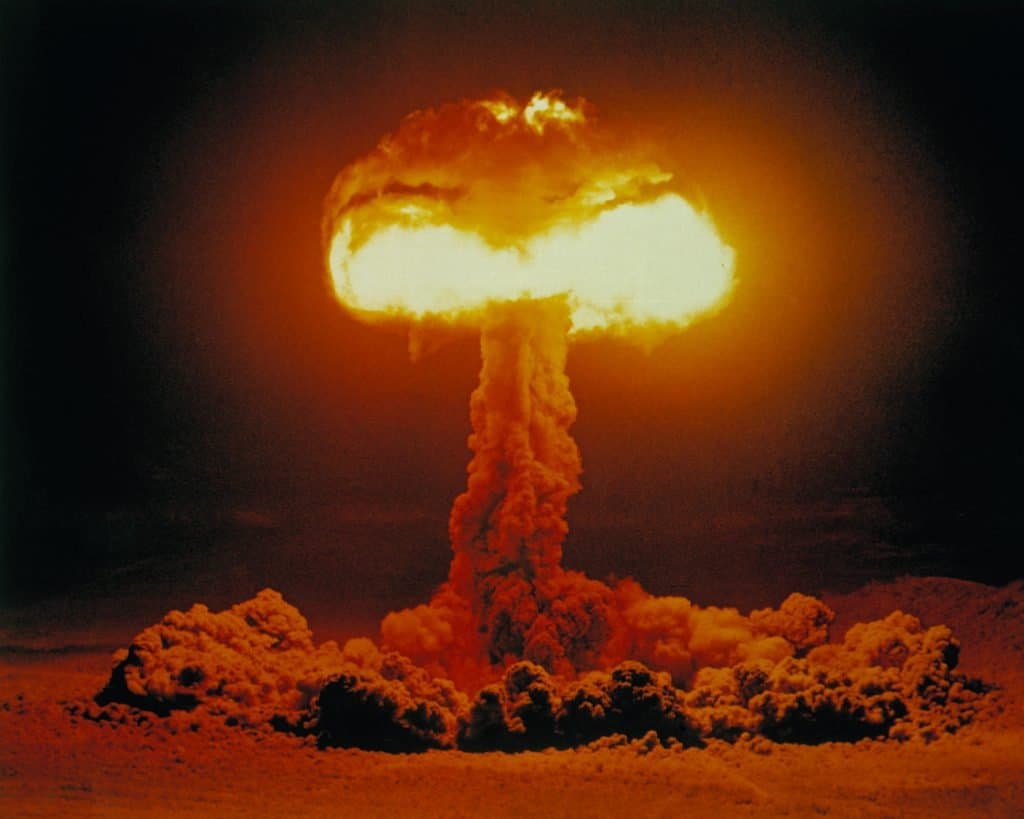
The United States has maintained a moratorium on full-yield nuclear explosive testing since its last underground test in 1992 at the Nevada Test Site, now the Nevada National Security Site, relying instead on the Stockpile Stewardship Program's computer simulations, laser facilities like the National Ignition Facility, and authorized subcritical experiments. A subcritical test occurred there in September 2024 to validate plutonium aging without producing a nuclear chain reaction. Geopolitical pressures—including Russia's suspension of New START inspections, China's rapid nuclear arsenal expansion, and North Korea's ongoing tests—have fueled Republican calls in Congress for potentially lifting the ban to certify modernized warheads, though the Biden administration emphasizes diplomacy and nonproliferation. The November 5 presidential election looms as the key catalyst, with a new administration possibly shifting toward resumed testing if adversaries escalate.
基于Polymarket数据的AI实验性摘要 · 更新于$582,552 交易量
2026年3月31日
<1%
$582,552 交易量
2026年3月31日
<1%
A nuclear test is defined as the intentional non-combat detonation of a device by the US that produces a nuclear chain reaction (fission or fusion), regardless of yield.
Accidents, radiological dispersal devices (bombs that spread radioactive material using conventional explosives such as "dirty bombs"), or actions by third parties will not count toward this market's resolution.
Tests not explicitly claimed by US may still qualify if a clear consensus of credible reporting attributes the nuclear detonation to US. For example, an unclaimed nuclear test analogous to the 1979 "Vela Incident" would count if credible reporting attributes it to the US.
The resolution source for this market will be a broad consensus of credible reporting.
市场开放时间: Nov 5, 2025, 1:13 PM ET
Resolver
0x65070BE91...A nuclear test is defined as the intentional non-combat detonation of a device by the US that produces a nuclear chain reaction (fission or fusion), regardless of yield.
Accidents, radiological dispersal devices (bombs that spread radioactive material using conventional explosives such as "dirty bombs"), or actions by third parties will not count toward this market's resolution.
Tests not explicitly claimed by US may still qualify if a clear consensus of credible reporting attributes the nuclear detonation to US. For example, an unclaimed nuclear test analogous to the 1979 "Vela Incident" would count if credible reporting attributes it to the US.
The resolution source for this market will be a broad consensus of credible reporting.
Resolver
0x65070BE91...The United States has maintained a moratorium on full-yield nuclear explosive testing since its last underground test in 1992 at the Nevada Test Site, now the Nevada National Security Site, relying instead on the Stockpile Stewardship Program's computer simulations, laser facilities like the National Ignition Facility, and authorized subcritical experiments. A subcritical test occurred there in September 2024 to validate plutonium aging without producing a nuclear chain reaction. Geopolitical pressures—including Russia's suspension of New START inspections, China's rapid nuclear arsenal expansion, and North Korea's ongoing tests—have fueled Republican calls in Congress for potentially lifting the ban to certify modernized warheads, though the Biden administration emphasizes diplomacy and nonproliferation. The November 5 presidential election looms as the key catalyst, with a new administration possibly shifting toward resumed testing if adversaries escalate.
基于Polymarket数据的AI实验性摘要 · 更新于
警惕外部链接哦。
警惕外部链接哦。
常见问题