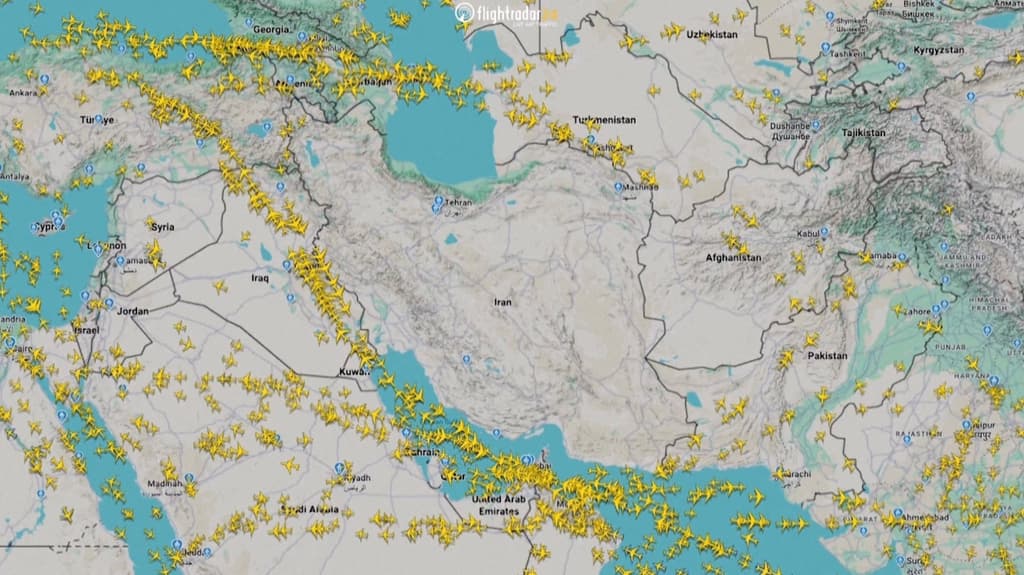
This market will resolve to “Yes” if Iran initiates a major closure of its airspace, that is not solely due to weather conditions, by the listed date, 11:59 PM ET. Otherwise, this market will resolve to “No”.
A “major closure” is defined as a broad closure, cancellation, or suspension of commercial flights transiting, arriving in, and departing from Iranian airspace or a major Iranian Airspace region. A qualifying closure must apply generally to flights across Iran or a major Iranian airspace region. Limited cancellations, delays, or other partial closures will not qualify. Limited exceptions to a broad closure, however, will not disqualify such a closure from counting (e.g. exceptions for certain flights pre-approved by the Iranian Civil Aviation Authority may be permitted).
Any non-weather complete suspension of commercial arrivals and departures affecting at least two of the following airports will qualify: Imam Khomeini International Airport (IKA), Mehrabad Airport (THR), Mashhad International Airport (MHD), Shiraz International Airport (SYZ), or Isfahan International Airport (IFN).
Qualifying previous examples include the January 2026 total closure of Iranian airspace except to international flights with express governmental permission (https://www.reuters.com/world/middle-east/iran-shuts-airspace-most-flights-flightradar24-says-2026-01-14/) and the April 2024 closure of Iran’s western airspace (https://www.reuters.com/world/middle-east/iranian-airports-cancel-flights-until-monday-morning-2024-04-14/). Non-qualifying examples include the January 27, 2026 partial closure of Iranian airspace around the Strait of Hormuz (https://www.aa.com.tr/en/middle-east/iran-issues-airspace-notice-for-military-drills-near-strait-of-hormuz/3812508) and the January 25 - April 25, 2026 VFR (Visual Flight Rules) flights suspension which did not broadly close commercial aviation in a qualifying region (https://www.intellinews.com/iran-suspends-general-aviation-and-vfr-flights-in-new-airspace-directive-421997/).
Warnings, No-Fly-Zones, or other flight restrictions imposed by airlines or countries other than Iran will not be sufficient for a “Yes” resolution.
Airspace closures which occur solely due to weather conditions will not qualify.
The primary resolution sources for this market will be official information from Iranian aviation authorities and a consensus of credible reporting.Escalating tensions in the Strait of Hormuz, including Iran's May 5 missile and drone launches toward the UAE prompting partial UAE airspace restrictions, are driving trader focus on potential Iranian airspace closure amid a fragile US-Iran ceasefire extended from April 8. Following US-Israeli strikes in February-March that triggered widespread regional shutdowns, Iran's Civil Aviation Authority partially reopened eastern corridors and domestic routes in late April, but international carriers largely avoid the Tehran FIR. Recent IRGC drone shootdowns, Hormozgan missile activity, and US "Project Freedom" naval operations heighten risks of a broad commercial flight suspension. Israeli warnings of military action and diplomatic talks represent key near-term catalysts.
This market will resolve to “Yes” if Iran initiates a major closure of its airspace, that is not solely due to weather conditions, by the listed date, 11:59 PM ET. Otherwise, this market will resolve to “No”.
A “major closure” is defined as a broad closure, cancellation, or suspension of commercial flights transiting, arriving in, and departing from Iranian airspace or a major Iranian Airspace region. A qualifying closure must apply generally to flights across Iran or a major Iranian airspace region. Limited cancellations, delays, or other partial closures will not qualify. Limited exceptions to a broad closure, however, will not disqualify such a closure from counting (e.g. exceptions for certain flights pre-approved by the Iranian Civil Aviation Authority may be permitted).
Any non-weather complete suspension of commercial arrivals and departures affecting at least two of the following airports will qualify: Imam Khomeini International Airport (IKA), Mehrabad Airport (THR), Mashhad International Airport (MHD), Shiraz International Airport (SYZ), or Isfahan International Airport (IFN).
This market will resolve to “Yes” if Iran initiates a major closure of its airspace, that is not solely due to weather conditions, by the listed date, 11:59 PM ET. Otherwise, this market will resolve to “No”.
A “major closure” is defined as a broad closure, cancellation, or suspension of commercial flights transiting, arriving in, and departing from Iranian airspace or a major Iranian Airspace region. A qualifying closure must apply generally to flights across Iran or a major Iranian airspace region. Limited cancellations, delays, or other partial closures will not qualify. Limited exceptions to a broad closure, however, will not disqualify such a closure from counting (e.g. exceptions for certain flights pre-approved by the Iranian Civil Aviation Authority may be permitted).
Any non-weather complete suspension of commercial arrivals and departures affecting at least two of the following airports will qualify: Imam Khomeini International Airport (IKA), Mehrabad Airport (THR), Mashhad International Airport (MHD), Shiraz International Airport (SYZ), or Isfahan International Airport (IFN).
Qualifying previous examples include the January 2026 total closure of Iranian airspace except to international flights with express governmental permission (https://www.reuters.com/world/middle-east/iran-shuts-airspace-most-flights-flightradar24-says-2026-01-14/) and the April 2024 closure of Iran’s western airspace (https://www.reuters.com/world/middle-east/iranian-airports-cancel-flights-until-monday-morning-2024-04-14/). Non-qualifying examples include the January 27, 2026 partial closure of Iranian airspace around the Strait of Hormuz (https://www.aa.com.tr/en/middle-east/iran-issues-airspace-notice-for-military-drills-near-strait-of-hormuz/3812508) and the January 25 - April 25, 2026 VFR (Visual Flight Rules) flights suspension which did not broadly close commercial aviation in a qualifying region (https://www.intellinews.com/iran-suspends-general-aviation-and-vfr-flights-in-new-airspace-directive-421997/).
Warnings, No-Fly-Zones, or other flight restrictions imposed by airlines or countries other than Iran will not be sufficient for a “Yes” resolution.
Airspace closures which occur solely due to weather conditions will not qualify.
The primary resolution sources for this market will be official information from Iranian aviation authorities and a consensus of credible reporting.
Escalating tensions in the Strait of Hormuz, including Iran's May 5 missile and drone launches toward the UAE prompting partial UAE airspace restrictions, are driving trader focus on potential Iranian airspace closure amid a fragile US-Iran ceasefire extended from April 8. Following US-Israeli strikes in February-March that triggered widespread regional shutdowns, Iran's Civil Aviation Authority partially reopened eastern corridors and domestic routes in late April, but international carriers largely avoid the Tehran FIR. Recent IRGC drone shootdowns, Hormozgan missile activity, and US "Project Freedom" naval operations heighten risks of a broad commercial flight suspension. Israeli warnings of military action and diplomatic talks represent key near-term catalysts.
สรุปจาก AI ทดลองที่อ้างอิงข้อมูลจาก Polymarket ไม่ใช่คำแนะนำในการเทรดและไม่มีผลต่อการตัดสินตลาดนี้ · อัปเดตแล้ว
May 5 2026
U.S. officials confirmed that a diplomatic de‑escalation effort had delayed any planned large‑scale Iranian airspace shutdown, causing the market to settle slightly lower
May 31 dips to 52%3%
U.S. officials confirmed that a diplomatic de‑escalation effort had delayed any planned large‑scale Iranian airspace shutdown, causing the market to settle slightly lower
May 4 2026
Iran announced the reopening of its western airspace region (covering Shiraz and Isfahan) after a 12‑hour suspension, but kept the eastern sector closed, keeping two major
May 31 surges to 59%18%
Iran announced the reopening of its western airspace region (covering Shiraz and Isfahan) after a 12‑hour suspension, but kept the eastern sector closed, keeping two major airports (IKA, MHD) grounded
May 4 2026
Following the partial reopening, the Iranian civil aviation ministry clarified that the suspension of arrivals/departures at IKA and THR would continue until further notice,
May 31 dips to 55%4%
Following the partial reopening, the Iranian civil aviation ministry clarified that the suspension of arrivals/departures at IKA and THR would continue until further notice, pushing the market back up
May 3 2026
Market reacts to news of rocket attacks near Iraqi airbases and continued militia activity linked to Iran, raising fears of renewed conflict and possible airspace closure; no
May 8 jumps to 20%6%
Market reacts to news of rocket attacks near Iraqi airbases and continued militia activity linked to Iran, raising fears of renewed conflict and possible airspace closure; no official closure yet
May 3 2026
A senior Iranian military official warned that “any further escalation could lead to a nationwide airspace shutdown,” sparking a brief rise in Yes‑probability
May 31 dips to 41%3%
A senior Iranian military official warned that “any further escalation could lead to a nationwide airspace shutdown,” sparking a brief rise in Yes‑probability
May 2 2026
Airlines Air India and IndiGo reported cancellations of several long‑haul services after the Iranian restriction was confirmed to affect flights over both IKA and THR
May 31 drops to 36%11%
Airlines Air India and IndiGo reported cancellations of several long‑haul services after the Iranian restriction was confirmed to affect flights over both IKA and THR
May 2 2026
Reuters quoted Flightradar24 data showing that, on the same day, five Iranian carriers resumed limited operations, prompting traders to reassess the likelihood of a full closure
May 31 jumps to 44%8%
Reuters quoted Flightradar24 data showing that, on the same day, five Iranian carriers resumed limited operations, prompting traders to reassess the likelihood of a full closure
May 2 2026
Reports highlight that Iran’s airspace remains officially closed to broad commercial overflights despite partial reopening of some airports;
May 8 drops to 14%8%
diplomatic talks show no breakthrough, sustaining closure risk perception
May 1 2026
Iran’s civil aviation authority issued a notice extending the temporary restriction on Tehran’s Flight Information Region, allowing only pre‑approved international flights and
May 31 jumps to 47%9%
Iran’s civil aviation authority issued a notice extending the temporary restriction on Tehran’s Flight Information Region, allowing only pre‑approved international flights and suspending all domestic commercial traffic
May 1 2026
Market opens amid ongoing uncertainty about Iran’s airspace status following fragile US-Iran ceasefire and phased reopening of regional airspaces;
May 8 dips to 22%2%
no new closure announced but risk remains elevated
This market will resolve to “Yes” if Iran initiates a major closure of its airspace, that is not solely due to weather conditions, by the listed date, 11:59 PM ET. Otherwise, this market will resolve to “No”.
A “major closure” is defined as a broad closure, cancellation, or suspension of commercial flights transiting, arriving in, and departing from Iranian airspace or a major Iranian Airspace region. A qualifying closure must apply generally to flights across Iran or a major Iranian airspace region. Limited cancellations, delays, or other partial closures will not qualify. Limited exceptions to a broad closure, however, will not disqualify such a closure from counting (e.g. exceptions for certain flights pre-approved by the Iranian Civil Aviation Authority may be permitted).
Any non-weather complete suspension of commercial arrivals and departures affecting at least two of the following airports will qualify: Imam Khomeini International Airport (IKA), Mehrabad Airport (THR), Mashhad International Airport (MHD), Shiraz International Airport (SYZ), or Isfahan International Airport (IFN).
Qualifying previous examples include the January 2026 total closure of Iranian airspace except to international flights with express governmental permission (https://www.reuters.com/world/middle-east/iran-shuts-airspace-most-flights-flightradar24-says-2026-01-14/) and the April 2024 closure of Iran’s western airspace (https://www.reuters.com/world/middle-east/iranian-airports-cancel-flights-until-monday-morning-2024-04-14/). Non-qualifying examples include the January 27, 2026 partial closure of Iranian airspace around the Strait of Hormuz (https://www.aa.com.tr/en/middle-east/iran-issues-airspace-notice-for-military-drills-near-strait-of-hormuz/3812508) and the January 25 - April 25, 2026 VFR (Visual Flight Rules) flights suspension which did not broadly close commercial aviation in a qualifying region (https://www.intellinews.com/iran-suspends-general-aviation-and-vfr-flights-in-new-airspace-directive-421997/).
Warnings, No-Fly-Zones, or other flight restrictions imposed by airlines or countries other than Iran will not be sufficient for a “Yes” resolution.
Airspace closures which occur solely due to weather conditions will not qualify.
The primary resolution sources for this market will be official information from Iranian aviation authorities and a consensus of credible reporting.Escalating tensions in the Strait of Hormuz, including Iran's May 5 missile and drone launches toward the UAE prompting partial UAE airspace restrictions, are driving trader focus on potential Iranian airspace closure amid a fragile US-Iran ceasefire extended from April 8. Following US-Israeli strikes in February-March that triggered widespread regional shutdowns, Iran's Civil Aviation Authority partially reopened eastern corridors and domestic routes in late April, but international carriers largely avoid the Tehran FIR. Recent IRGC drone shootdowns, Hormozgan missile activity, and US "Project Freedom" naval operations heighten risks of a broad commercial flight suspension. Israeli warnings of military action and diplomatic talks represent key near-term catalysts.
This market will resolve to “Yes” if Iran initiates a major closure of its airspace, that is not solely due to weather conditions, by the listed date, 11:59 PM ET. Otherwise, this market will resolve to “No”.
A “major closure” is defined as a broad closure, cancellation, or suspension of commercial flights transiting, arriving in, and departing from Iranian airspace or a major Iranian Airspace region. A qualifying closure must apply generally to flights across Iran or a major Iranian airspace region. Limited cancellations, delays, or other partial closures will not qualify. Limited exceptions to a broad closure, however, will not disqualify such a closure from counting (e.g. exceptions for certain flights pre-approved by the Iranian Civil Aviation Authority may be permitted).
Any non-weather complete suspension of commercial arrivals and departures affecting at least two of the following airports will qualify: Imam Khomeini International Airport (IKA), Mehrabad Airport (THR), Mashhad International Airport (MHD), Shiraz International Airport (SYZ), or Isfahan International Airport (IFN).
This market will resolve to “Yes” if Iran initiates a major closure of its airspace, that is not solely due to weather conditions, by the listed date, 11:59 PM ET. Otherwise, this market will resolve to “No”.
A “major closure” is defined as a broad closure, cancellation, or suspension of commercial flights transiting, arriving in, and departing from Iranian airspace or a major Iranian Airspace region. A qualifying closure must apply generally to flights across Iran or a major Iranian airspace region. Limited cancellations, delays, or other partial closures will not qualify. Limited exceptions to a broad closure, however, will not disqualify such a closure from counting (e.g. exceptions for certain flights pre-approved by the Iranian Civil Aviation Authority may be permitted).
Any non-weather complete suspension of commercial arrivals and departures affecting at least two of the following airports will qualify: Imam Khomeini International Airport (IKA), Mehrabad Airport (THR), Mashhad International Airport (MHD), Shiraz International Airport (SYZ), or Isfahan International Airport (IFN).
Qualifying previous examples include the January 2026 total closure of Iranian airspace except to international flights with express governmental permission (https://www.reuters.com/world/middle-east/iran-shuts-airspace-most-flights-flightradar24-says-2026-01-14/) and the April 2024 closure of Iran’s western airspace (https://www.reuters.com/world/middle-east/iranian-airports-cancel-flights-until-monday-morning-2024-04-14/). Non-qualifying examples include the January 27, 2026 partial closure of Iranian airspace around the Strait of Hormuz (https://www.aa.com.tr/en/middle-east/iran-issues-airspace-notice-for-military-drills-near-strait-of-hormuz/3812508) and the January 25 - April 25, 2026 VFR (Visual Flight Rules) flights suspension which did not broadly close commercial aviation in a qualifying region (https://www.intellinews.com/iran-suspends-general-aviation-and-vfr-flights-in-new-airspace-directive-421997/).
Warnings, No-Fly-Zones, or other flight restrictions imposed by airlines or countries other than Iran will not be sufficient for a “Yes” resolution.
Airspace closures which occur solely due to weather conditions will not qualify.
The primary resolution sources for this market will be official information from Iranian aviation authorities and a consensus of credible reporting.
Escalating tensions in the Strait of Hormuz, including Iran's May 5 missile and drone launches toward the UAE prompting partial UAE airspace restrictions, are driving trader focus on potential Iranian airspace closure amid a fragile US-Iran ceasefire extended from April 8. Following US-Israeli strikes in February-March that triggered widespread regional shutdowns, Iran's Civil Aviation Authority partially reopened eastern corridors and domestic routes in late April, but international carriers largely avoid the Tehran FIR. Recent IRGC drone shootdowns, Hormozgan missile activity, and US "Project Freedom" naval operations heighten risks of a broad commercial flight suspension. Israeli warnings of military action and diplomatic talks represent key near-term catalysts.
สรุปจาก AI ทดลองที่อ้างอิงข้อมูลจาก Polymarket ไม่ใช่คำแนะนำในการเทรดและไม่มีผลต่อการตัดสินตลาดนี้ · อัปเดตแล้ว
May 5 2026
U.S. officials confirmed that a diplomatic de‑escalation effort had delayed any planned large‑scale Iranian airspace shutdown, causing the market to settle slightly lower
May 31 dips to 52%3%
U.S. officials confirmed that a diplomatic de‑escalation effort had delayed any planned large‑scale Iranian airspace shutdown, causing the market to settle slightly lower
May 4 2026
Iran announced the reopening of its western airspace region (covering Shiraz and Isfahan) after a 12‑hour suspension, but kept the eastern sector closed, keeping two major
May 31 surges to 59%18%
Iran announced the reopening of its western airspace region (covering Shiraz and Isfahan) after a 12‑hour suspension, but kept the eastern sector closed, keeping two major airports (IKA, MHD) grounded
May 4 2026
Following the partial reopening, the Iranian civil aviation ministry clarified that the suspension of arrivals/departures at IKA and THR would continue until further notice,
May 31 dips to 55%4%
Following the partial reopening, the Iranian civil aviation ministry clarified that the suspension of arrivals/departures at IKA and THR would continue until further notice, pushing the market back up
May 3 2026
Market reacts to news of rocket attacks near Iraqi airbases and continued militia activity linked to Iran, raising fears of renewed conflict and possible airspace closure; no
May 8 jumps to 20%6%
Market reacts to news of rocket attacks near Iraqi airbases and continued militia activity linked to Iran, raising fears of renewed conflict and possible airspace closure; no official closure yet
May 3 2026
A senior Iranian military official warned that “any further escalation could lead to a nationwide airspace shutdown,” sparking a brief rise in Yes‑probability
May 31 dips to 41%3%
A senior Iranian military official warned that “any further escalation could lead to a nationwide airspace shutdown,” sparking a brief rise in Yes‑probability
May 2 2026
Airlines Air India and IndiGo reported cancellations of several long‑haul services after the Iranian restriction was confirmed to affect flights over both IKA and THR
May 31 drops to 36%11%
Airlines Air India and IndiGo reported cancellations of several long‑haul services after the Iranian restriction was confirmed to affect flights over both IKA and THR
May 2 2026
Reuters quoted Flightradar24 data showing that, on the same day, five Iranian carriers resumed limited operations, prompting traders to reassess the likelihood of a full closure
May 31 jumps to 44%8%
Reuters quoted Flightradar24 data showing that, on the same day, five Iranian carriers resumed limited operations, prompting traders to reassess the likelihood of a full closure
May 2 2026
Reports highlight that Iran’s airspace remains officially closed to broad commercial overflights despite partial reopening of some airports;
May 8 drops to 14%8%
diplomatic talks show no breakthrough, sustaining closure risk perception
May 1 2026
Iran’s civil aviation authority issued a notice extending the temporary restriction on Tehran’s Flight Information Region, allowing only pre‑approved international flights and
May 31 jumps to 47%9%
Iran’s civil aviation authority issued a notice extending the temporary restriction on Tehran’s Flight Information Region, allowing only pre‑approved international flights and suspending all domestic commercial traffic
May 1 2026
Market opens amid ongoing uncertainty about Iran’s airspace status following fragile US-Iran ceasefire and phased reopening of regional airspaces;
May 8 dips to 22%2%
no new closure announced but risk remains elevated
ระวังลิงก์ภายนอก
ระวังลิงก์ภายนอก
คำถามที่พบบ่อย