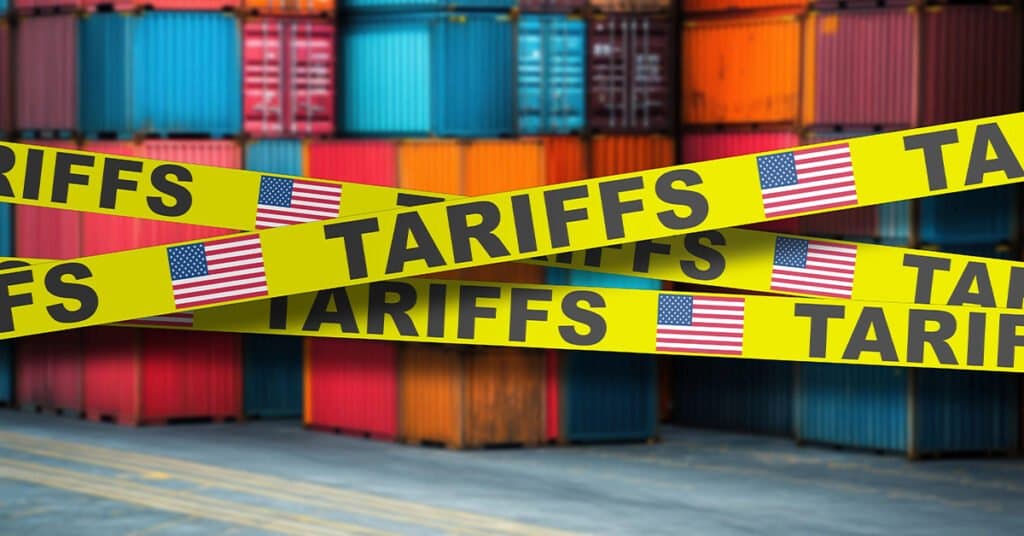
President-elect Trump's firm commitments to imposing a universal 10% tariff on all imports as a core Day One executive action have driven trader consensus to near-certainty, with transition co-chair Howard Lutnick confirming preparations for immediate rollout post-January 20 inauguration under authorities like IEEPA or Section 301. Recent statements from Trump, including December interviews emphasizing "everybody pays," alongside no announced delays or congressional pushback, solidify this positioning despite potential market disruptions. While legal challenges from affected industries, unexpected diplomatic concessions, or a policy pivot could theoretically intervene before March 31, traders price these risks as minimal given historical executive latitude on trade policy.
Experimentelle KI-generierte Zusammenfassung mit Polymarket-Daten · AktualisiertJa
$61,356 Vol.
$61,356 Vol.
Ja
$61,356 Vol.
$61,356 Vol.
A general or blanket tariff is a tariff policy that applies a baseline tariff rate of 10% or greater to imports broadly, rather than being limited to a narrow set of products or countries. A tariff that includes item-specific, country-specific, or other limited exceptions will still qualify, as long as a baseline policy of a 10% or greater tariff on imports into the United States is in effect at the specified time.
“In effect" means the tariff must be operational in its application to US imports at the specified time. General or blanket tariffs which go into effect, but are then blocked, injuncted, repealed, or otherwise invalidated such that a blanket tariff rate of 10% or more is not being imposed on imports into the United States at this market’s resolution time will not count.
This market's primary resolution source will be official information from the United States federal government; however, a consensus of credible information may also be used.
Markt eröffnet: Feb 20, 2026, 8:06 PM ET
Resolver
0x65070BE91...A general or blanket tariff is a tariff policy that applies a baseline tariff rate of 10% or greater to imports broadly, rather than being limited to a narrow set of products or countries. A tariff that includes item-specific, country-specific, or other limited exceptions will still qualify, as long as a baseline policy of a 10% or greater tariff on imports into the United States is in effect at the specified time.
“In effect" means the tariff must be operational in its application to US imports at the specified time. General or blanket tariffs which go into effect, but are then blocked, injuncted, repealed, or otherwise invalidated such that a blanket tariff rate of 10% or more is not being imposed on imports into the United States at this market’s resolution time will not count.
This market's primary resolution source will be official information from the United States federal government; however, a consensus of credible information may also be used.
Resolver
0x65070BE91...President-elect Trump's firm commitments to imposing a universal 10% tariff on all imports as a core Day One executive action have driven trader consensus to near-certainty, with transition co-chair Howard Lutnick confirming preparations for immediate rollout post-January 20 inauguration under authorities like IEEPA or Section 301. Recent statements from Trump, including December interviews emphasizing "everybody pays," alongside no announced delays or congressional pushback, solidify this positioning despite potential market disruptions. While legal challenges from affected industries, unexpected diplomatic concessions, or a policy pivot could theoretically intervene before March 31, traders price these risks as minimal given historical executive latitude on trade policy.
Experimentelle KI-generierte Zusammenfassung mit Polymarket-Daten · Aktualisiert
Vorsicht bei externen Links.
Vorsicht bei externen Links.
Häufig gestellte Fragen