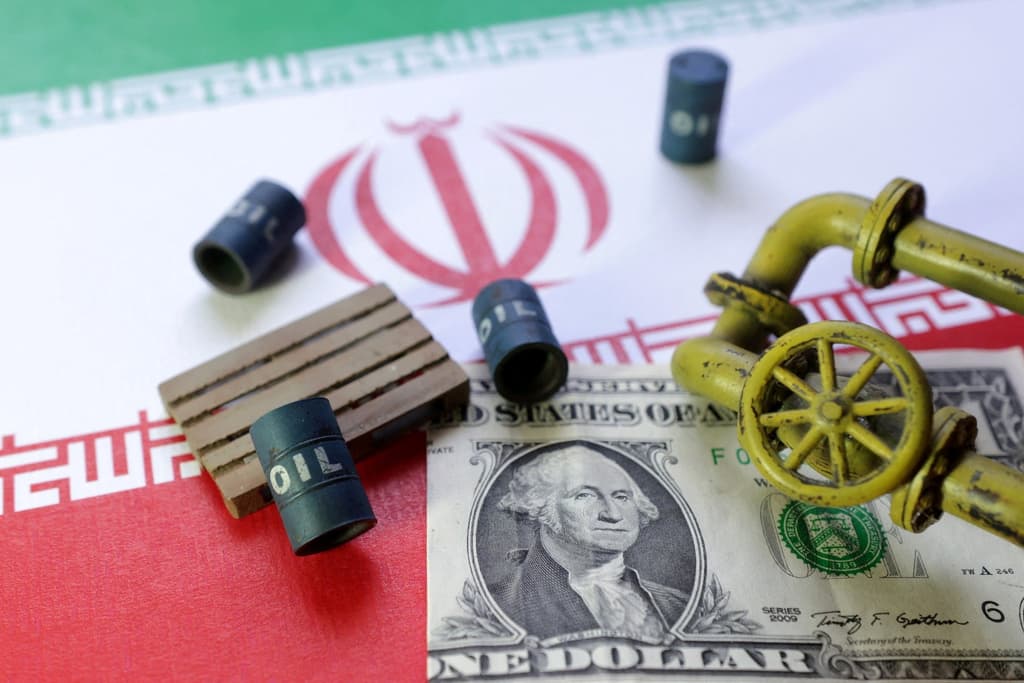
Iran's rejection of a US-proposed 15-point ceasefire plan on March 25—dismissing direct talks with the "enemy" while issuing a counterproposal—has entrenched trader skepticism amid escalating airstrikes on Israel, Gulf targets, and Iranian facilities. Ongoing threats to close the Strait of Hormuz, including tanker strikes, have propelled Brent crude to $112.57 on March 27, up 47% since late February US-Israel strikes on Iran began, with prices climbing toward $120 without de-escalation signals. President Trump's diplomatic push faces Iranian hardline resistance, persistent proxy actions, and no confirmed negotiations, driving the 61% "No" consensus as crowdsourced bets highlight risks of oil hitting the threshold first.
Experimentelle KI-generierte Zusammenfassung mit Polymarket-Daten · AktualisiertUS x Iran Waffenruhe, bevor Öl 120 $ erreicht?
US x Iran Waffenruhe, bevor Öl 120 $ erreicht?
Ja
$42,391 Vol.
$42,391 Vol.
Jun 30, 2026
Ja
$42,391 Vol.
$42,391 Vol.
Jun 30, 2026
This market will resolve to “Yes” if there is an official ceasefire agreement, defined as a publicly announced and mutually agreed halt in direct military engagement, between the United States and Iran, before Crude Oil (CL) hits ↑ $120.
This market will resolve to “No” if Crude Oil (CL) hits ↑ $120 before there is an official ceasefire agreement, defined as a publicly announced and mutually agreed halt in direct military engagement, between the United States and Iran.
If there is neither a qualifying ceasefire agreement between the United States and Iran nor does Crude Oil (CL) hit ↑ $120 by June 30, 2026 (ET), this market will resolve 50-50.
If both events occur on the same calendar date, this market will resolve based on which event occurred earlier in ET time.
1. Crude Oil (CL) hits ↑ $120
This market will resolve to "Yes" if, on any trading day, the official CME settlement price for the Active Month (front month) of Crude Oil (CL) futures is equal to or above the listed price by the final trading day of June 2026. Otherwise, the market will resolve to "No".
For CME Crude Oil (CL) futures contracts, the active month is the nearest of the contract months listed. The active month becomes a non-active month effective two business days prior to the spot month expiration. For example; if the spot month expires on a Friday the next listed contract will be considered the Active Month on the Wednesday prior to the spot month expiration.
Only the Active Month's official settlement price published by CME Group will be considered. Intraday trades, highs, lows, bids, offers, midpoint values, or indicative prices do not count.
Note that the settlement price may differ from the last traded price. CME's methodology to determine the settlement price can vary by commodity and contract.
Only days on which CME publishes an official settlement price for the Active Month will be included. Days without settlement prices (weekends, holidays, or market closures) are ignored.
This market will resolve based on the settlement price as it appears on the CME settlement page at the time it is first published for that trading day, regardless of any later corrections or updates.
The resolution source is the CME Group website — specifically, the daily "Settlement" price for the Active Month of Crude Oil (CL) futures.
2. US x Iran ceasefire
For the purposes of this market, an “official ceasefire agreement” requires clear public confirmation from both the United States government and the government of Iran that they have agreed to halt military hostilities against one another, or for an official ceasefire agreement to be otherwise confirmed to have been reached by an overwhelming consensus of media reporting.
If the agreement is officially reached before Trump visits China, this market will resolve to “Yes,” regardless of whether or when the ceasefire officially takes effect.
Any form of informal understanding, backchannel communication, de-escalation without an announced agreement, or unilateral pause in hostilities will not be considered an official ceasefire. Humanitarian pauses, limited operational pauses, or temporary tactical stand-downs will not count toward the resolution of this market.
A broader peace deal, normalization agreement, or political framework will qualify only if it includes a publicly announced and mutually agreed halt in military engagement between the United States and Iran, effective on a specified date, or otherwise confirmed by an overwhelming consensus of credible reporting. Agreements that outline future negotiations or de-escalation measures without an explicit, dated commitment to stop fighting will not qualify.
The primary resolution source for whether a qualifying ceasefire agreement has been reached will be official statements from the United States government and the government of Iran. However, an overwhelming consensus of credible media reporting confirming that an official ceasefire agreement has been reached will suffice.Iran's rejection of a US-proposed 15-point ceasefire plan on March 25—dismissing direct talks with the "enemy" while issuing a counterproposal—has entrenched trader skepticism amid escalating airstrikes on Israel, Gulf targets, and Iranian facilities. Ongoing threats to close the Strait of Hormuz, including tanker strikes, have propelled Brent crude to $112.57 on March 27, up 47% since late February US-Israel strikes on Iran began, with prices climbing toward $120 without de-escalation signals. President Trump's diplomatic push faces Iranian hardline resistance, persistent proxy actions, and no confirmed negotiations, driving the 61% "No" consensus as crowdsourced bets highlight risks of oil hitting the threshold first.
This market will resolve to “Yes” if there is an official ceasefire agreement, defined as a publicly announced and mutually agreed halt in direct military engagement, between the United States and Iran, before Crude Oil (CL) hits ↑ $120.
This market will resolve to “No” if Crude Oil (CL) hits ↑ $120 before there is an official ceasefire agreement, defined as a publicly announced and mutually agreed halt in direct military engagement, between the United States and Iran.
If there is neither a qualifying ceasefire agreement between the United States and Iran nor does Crude Oil (CL) hit ↑ $120 by June 30, 2026 (ET), this market will resolve 50-50.
If both events occur on the same calendar date, this market will resolve based on which event occurred earlier in ET time.
1. Crude Oil (CL) hits ↑ $120
This market will resolve to "Yes" if, on any trading day, the official CME settlement price for the Active Month (front month) of Crude Oil (CL) futures is equal to or above the listed price by the final trading day of June 2026. Otherwise, the market will resolve to "No".
For CME Crude Oil (CL) futures contracts, the active month is the nearest of the contract months listed. The active month becomes a non-active month effective two business days prior to the spot month expiration. For example; if the spot month expires on a Friday the next listed contract will be considered the Active Month on the Wednesday prior to the spot month expiration.
Only the Active Month's official settlement price published by CME Group will be considered. Intraday trades, highs, lows, bids, offers, midpoint values, or indicative prices do not count.
Note that the settlement price may differ from the last traded price. CME's methodology to determine the settlement price can vary by commodity and contract.
Only days on which CME publishes an official settlement price for the Active Month will be included. Days without settlement prices (weekends, holidays, or market closures) are ignored.
This market will resolve based on the settlement price as it appears on the CME settlement page at the time it is first published for that trading day, regardless of any later corrections or updates.
The resolution source is the CME Group website — specifically, the daily "Settlement" price for the Active Month of Crude Oil (CL) futures.
2. US x Iran ceasefire
For the purposes of this market, an “official ceasefire agreement” requires clear public confirmation from both the United States government and the government of Iran that they have agreed to halt military hostilities against one another, or for an official ceasefire agreement to be otherwise confirmed to have been reached by an overwhelming consensus of media reporting.
If the agreement is officially reached before Trump visits China, this market will resolve to “Yes,” regardless of whether or when the ceasefire officially takes effect.
Any form of informal understanding, backchannel communication, de-escalation without an announced agreement, or unilateral pause in hostilities will not be considered an official ceasefire. Humanitarian pauses, limited operational pauses, or temporary tactical stand-downs will not count toward the resolution of this market.
A broader peace deal, normalization agreement, or political framework will qualify only if it includes a publicly announced and mutually agreed halt in military engagement between the United States and Iran, effective on a specified date, or otherwise confirmed by an overwhelming consensus of credible reporting. Agreements that outline future negotiations or de-escalation measures without an explicit, dated commitment to stop fighting will not qualify.
The primary resolution source for whether a qualifying ceasefire agreement has been reached will be official statements from the United States government and the government of Iran. However, an overwhelming consensus of credible media reporting confirming that an official ceasefire agreement has been reached will suffice.
This market will resolve to “No” if Crude Oil (CL) hits ↑ $120 before there is an official ceasefire agreement, defined as a publicly announced and mutually agreed halt in direct military engagement, between the United States and Iran.
If there is neither a qualifying ceasefire agreement between the United States and Iran nor does Crude Oil (CL) hit ↑ $120 by June 30, 2026 (ET), this market will resolve 50-50.
If both events occur on the same calendar date, this market will resolve based on which event occurred earlier in ET time.
1. Crude Oil (CL) hits ↑ $120
This market will resolve to "Yes" if, on any trading day, the official CME settlement price for the Active Month (front month) of Crude Oil (CL) futures is equal to or above the listed price by the final trading day of June 2026. Otherwise, the market will resolve to "No".
For CME Crude Oil (CL) futures contracts, the active month is the nearest of the contract months listed. The active month becomes a non-active month effective two business days prior to the spot month expiration. For example; if the spot month expires on a Friday the next listed contract will be considered the Active Month on the Wednesday prior to the spot month expiration.
Only the Active Month's official settlement price published by CME Group will be considered. Intraday trades, highs, lows, bids, offers, midpoint values, or indicative prices do not count.
Note that the settlement price may differ from the last traded price. CME's methodology to determine the settlement price can vary by commodity and contract.
Only days on which CME publishes an official settlement price for the Active Month will be included. Days without settlement prices (weekends, holidays, or market closures) are ignored.
This market will resolve based on the settlement price as it appears on the CME settlement page at the time it is first published for that trading day, regardless of any later corrections or updates.
The resolution source is the CME Group website — specifically, the daily "Settlement" price for the Active Month of Crude Oil (CL) futures.
2. US x Iran ceasefire
For the purposes of this market, an “official ceasefire agreement” requires clear public confirmation from both the United States government and the government of Iran that they have agreed to halt military hostilities against one another, or for an official ceasefire agreement to be otherwise confirmed to have been reached by an overwhelming consensus of media reporting.
If the agreement is officially reached before Trump visits China, this market will resolve to “Yes,” regardless of whether or when the ceasefire officially takes effect.
Any form of informal understanding, backchannel communication, de-escalation without an announced agreement, or unilateral pause in hostilities will not be considered an official ceasefire. Humanitarian pauses, limited operational pauses, or temporary tactical stand-downs will not count toward the resolution of this market.
A broader peace deal, normalization agreement, or political framework will qualify only if it includes a publicly announced and mutually agreed halt in military engagement between the United States and Iran, effective on a specified date, or otherwise confirmed by an overwhelming consensus of credible reporting. Agreements that outline future negotiations or de-escalation measures without an explicit, dated commitment to stop fighting will not qualify.
The primary resolution source for whether a qualifying ceasefire agreement has been reached will be official statements from the United States government and the government of Iran. However, an overwhelming consensus of credible media reporting confirming that an official ceasefire agreement has been reached will suffice.
Markt eröffnet: Mar 26, 2026, 4:45 PM ET
Volumen
$42,391Enddatum
Jun 30, 2026Markt eröffnet
Mar 26, 2026, 4:45 PM ETResolver
0x65070BE91...This market will resolve to “Yes” if there is an official ceasefire agreement, defined as a publicly announced and mutually agreed halt in direct military engagement, between the United States and Iran, before Crude Oil (CL) hits ↑ $120.
This market will resolve to “No” if Crude Oil (CL) hits ↑ $120 before there is an official ceasefire agreement, defined as a publicly announced and mutually agreed halt in direct military engagement, between the United States and Iran.
If there is neither a qualifying ceasefire agreement between the United States and Iran nor does Crude Oil (CL) hit ↑ $120 by June 30, 2026 (ET), this market will resolve 50-50.
If both events occur on the same calendar date, this market will resolve based on which event occurred earlier in ET time.
1. Crude Oil (CL) hits ↑ $120
This market will resolve to "Yes" if, on any trading day, the official CME settlement price for the Active Month (front month) of Crude Oil (CL) futures is equal to or above the listed price by the final trading day of June 2026. Otherwise, the market will resolve to "No".
For CME Crude Oil (CL) futures contracts, the active month is the nearest of the contract months listed. The active month becomes a non-active month effective two business days prior to the spot month expiration. For example; if the spot month expires on a Friday the next listed contract will be considered the Active Month on the Wednesday prior to the spot month expiration.
Only the Active Month's official settlement price published by CME Group will be considered. Intraday trades, highs, lows, bids, offers, midpoint values, or indicative prices do not count.
Note that the settlement price may differ from the last traded price. CME's methodology to determine the settlement price can vary by commodity and contract.
Only days on which CME publishes an official settlement price for the Active Month will be included. Days without settlement prices (weekends, holidays, or market closures) are ignored.
This market will resolve based on the settlement price as it appears on the CME settlement page at the time it is first published for that trading day, regardless of any later corrections or updates.
The resolution source is the CME Group website — specifically, the daily "Settlement" price for the Active Month of Crude Oil (CL) futures.
2. US x Iran ceasefire
For the purposes of this market, an “official ceasefire agreement” requires clear public confirmation from both the United States government and the government of Iran that they have agreed to halt military hostilities against one another, or for an official ceasefire agreement to be otherwise confirmed to have been reached by an overwhelming consensus of media reporting.
If the agreement is officially reached before Trump visits China, this market will resolve to “Yes,” regardless of whether or when the ceasefire officially takes effect.
Any form of informal understanding, backchannel communication, de-escalation without an announced agreement, or unilateral pause in hostilities will not be considered an official ceasefire. Humanitarian pauses, limited operational pauses, or temporary tactical stand-downs will not count toward the resolution of this market.
A broader peace deal, normalization agreement, or political framework will qualify only if it includes a publicly announced and mutually agreed halt in military engagement between the United States and Iran, effective on a specified date, or otherwise confirmed by an overwhelming consensus of credible reporting. Agreements that outline future negotiations or de-escalation measures without an explicit, dated commitment to stop fighting will not qualify.
The primary resolution source for whether a qualifying ceasefire agreement has been reached will be official statements from the United States government and the government of Iran. However, an overwhelming consensus of credible media reporting confirming that an official ceasefire agreement has been reached will suffice.Iran's rejection of a US-proposed 15-point ceasefire plan on March 25—dismissing direct talks with the "enemy" while issuing a counterproposal—has entrenched trader skepticism amid escalating airstrikes on Israel, Gulf targets, and Iranian facilities. Ongoing threats to close the Strait of Hormuz, including tanker strikes, have propelled Brent crude to $112.57 on March 27, up 47% since late February US-Israel strikes on Iran began, with prices climbing toward $120 without de-escalation signals. President Trump's diplomatic push faces Iranian hardline resistance, persistent proxy actions, and no confirmed negotiations, driving the 61% "No" consensus as crowdsourced bets highlight risks of oil hitting the threshold first.
This market will resolve to “Yes” if there is an official ceasefire agreement, defined as a publicly announced and mutually agreed halt in direct military engagement, between the United States and Iran, before Crude Oil (CL) hits ↑ $120.
This market will resolve to “No” if Crude Oil (CL) hits ↑ $120 before there is an official ceasefire agreement, defined as a publicly announced and mutually agreed halt in direct military engagement, between the United States and Iran.
If there is neither a qualifying ceasefire agreement between the United States and Iran nor does Crude Oil (CL) hit ↑ $120 by June 30, 2026 (ET), this market will resolve 50-50.
If both events occur on the same calendar date, this market will resolve based on which event occurred earlier in ET time.
1. Crude Oil (CL) hits ↑ $120
This market will resolve to "Yes" if, on any trading day, the official CME settlement price for the Active Month (front month) of Crude Oil (CL) futures is equal to or above the listed price by the final trading day of June 2026. Otherwise, the market will resolve to "No".
For CME Crude Oil (CL) futures contracts, the active month is the nearest of the contract months listed. The active month becomes a non-active month effective two business days prior to the spot month expiration. For example; if the spot month expires on a Friday the next listed contract will be considered the Active Month on the Wednesday prior to the spot month expiration.
Only the Active Month's official settlement price published by CME Group will be considered. Intraday trades, highs, lows, bids, offers, midpoint values, or indicative prices do not count.
Note that the settlement price may differ from the last traded price. CME's methodology to determine the settlement price can vary by commodity and contract.
Only days on which CME publishes an official settlement price for the Active Month will be included. Days without settlement prices (weekends, holidays, or market closures) are ignored.
This market will resolve based on the settlement price as it appears on the CME settlement page at the time it is first published for that trading day, regardless of any later corrections or updates.
The resolution source is the CME Group website — specifically, the daily "Settlement" price for the Active Month of Crude Oil (CL) futures.
2. US x Iran ceasefire
For the purposes of this market, an “official ceasefire agreement” requires clear public confirmation from both the United States government and the government of Iran that they have agreed to halt military hostilities against one another, or for an official ceasefire agreement to be otherwise confirmed to have been reached by an overwhelming consensus of media reporting.
If the agreement is officially reached before Trump visits China, this market will resolve to “Yes,” regardless of whether or when the ceasefire officially takes effect.
Any form of informal understanding, backchannel communication, de-escalation without an announced agreement, or unilateral pause in hostilities will not be considered an official ceasefire. Humanitarian pauses, limited operational pauses, or temporary tactical stand-downs will not count toward the resolution of this market.
A broader peace deal, normalization agreement, or political framework will qualify only if it includes a publicly announced and mutually agreed halt in military engagement between the United States and Iran, effective on a specified date, or otherwise confirmed by an overwhelming consensus of credible reporting. Agreements that outline future negotiations or de-escalation measures without an explicit, dated commitment to stop fighting will not qualify.
The primary resolution source for whether a qualifying ceasefire agreement has been reached will be official statements from the United States government and the government of Iran. However, an overwhelming consensus of credible media reporting confirming that an official ceasefire agreement has been reached will suffice.
This market will resolve to “No” if Crude Oil (CL) hits ↑ $120 before there is an official ceasefire agreement, defined as a publicly announced and mutually agreed halt in direct military engagement, between the United States and Iran.
If there is neither a qualifying ceasefire agreement between the United States and Iran nor does Crude Oil (CL) hit ↑ $120 by June 30, 2026 (ET), this market will resolve 50-50.
If both events occur on the same calendar date, this market will resolve based on which event occurred earlier in ET time.
1. Crude Oil (CL) hits ↑ $120
This market will resolve to "Yes" if, on any trading day, the official CME settlement price for the Active Month (front month) of Crude Oil (CL) futures is equal to or above the listed price by the final trading day of June 2026. Otherwise, the market will resolve to "No".
For CME Crude Oil (CL) futures contracts, the active month is the nearest of the contract months listed. The active month becomes a non-active month effective two business days prior to the spot month expiration. For example; if the spot month expires on a Friday the next listed contract will be considered the Active Month on the Wednesday prior to the spot month expiration.
Only the Active Month's official settlement price published by CME Group will be considered. Intraday trades, highs, lows, bids, offers, midpoint values, or indicative prices do not count.
Note that the settlement price may differ from the last traded price. CME's methodology to determine the settlement price can vary by commodity and contract.
Only days on which CME publishes an official settlement price for the Active Month will be included. Days without settlement prices (weekends, holidays, or market closures) are ignored.
This market will resolve based on the settlement price as it appears on the CME settlement page at the time it is first published for that trading day, regardless of any later corrections or updates.
The resolution source is the CME Group website — specifically, the daily "Settlement" price for the Active Month of Crude Oil (CL) futures.
2. US x Iran ceasefire
For the purposes of this market, an “official ceasefire agreement” requires clear public confirmation from both the United States government and the government of Iran that they have agreed to halt military hostilities against one another, or for an official ceasefire agreement to be otherwise confirmed to have been reached by an overwhelming consensus of media reporting.
If the agreement is officially reached before Trump visits China, this market will resolve to “Yes,” regardless of whether or when the ceasefire officially takes effect.
Any form of informal understanding, backchannel communication, de-escalation without an announced agreement, or unilateral pause in hostilities will not be considered an official ceasefire. Humanitarian pauses, limited operational pauses, or temporary tactical stand-downs will not count toward the resolution of this market.
A broader peace deal, normalization agreement, or political framework will qualify only if it includes a publicly announced and mutually agreed halt in military engagement between the United States and Iran, effective on a specified date, or otherwise confirmed by an overwhelming consensus of credible reporting. Agreements that outline future negotiations or de-escalation measures without an explicit, dated commitment to stop fighting will not qualify.
The primary resolution source for whether a qualifying ceasefire agreement has been reached will be official statements from the United States government and the government of Iran. However, an overwhelming consensus of credible media reporting confirming that an official ceasefire agreement has been reached will suffice.
Volumen
$42,391Enddatum
Jun 30, 2026Markt eröffnet
Mar 26, 2026, 4:45 PM ETResolver
0x65070BE91...Iran's rejection of a US-proposed 15-point ceasefire plan on March 25—dismissing direct talks with the "enemy" while issuing a counterproposal—has entrenched trader skepticism amid escalating airstrikes on Israel, Gulf targets, and Iranian facilities. Ongoing threats to close the Strait of Hormuz, including tanker strikes, have propelled Brent crude to $112.57 on March 27, up 47% since late February US-Israel strikes on Iran began, with prices climbing toward $120 without de-escalation signals. President Trump's diplomatic push faces Iranian hardline resistance, persistent proxy actions, and no confirmed negotiations, driving the 61% "No" consensus as crowdsourced bets highlight risks of oil hitting the threshold first.
Experimentelle KI-generierte Zusammenfassung mit Polymarket-Daten · Aktualisiert
Vorsicht bei externen Links.
Vorsicht bei externen Links.
Häufig gestellte Fragen