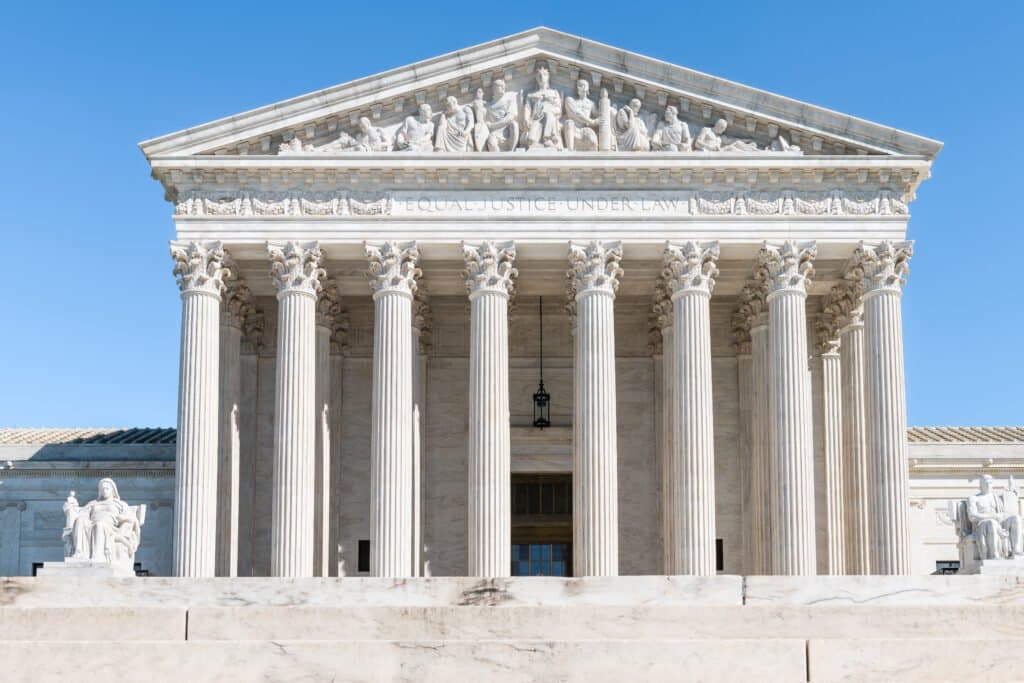
SCOTUS akzeptiert Sportveranstaltungsvertragsfall bis zum...?
SCOTUS akzeptiert Sportveranstaltungsvertragsfall bis zum...?
$916,609 Vol.
Dec 31, 2026
31. Juli
18%
31. Dezember
56%
$916,609 Vol.
31. Juli
$916,609 Vol.
18%
31. Dezember
$0 Vol.
56%
This market will resolve to "Yes" if the Supreme Court of the United States grants certiorari in a case explicitly concerning the legality, regulation, or jurisdictional authority over sports event contracts by December 31, 2026, 11:59 PM ET. Otherwise, this market will resolve to "No."
A case qualifies if it addresses at least one of the following: (1) whether contracts based on sporting event outcomes constitute regulated derivatives under the Commodity Exchange Act; (2) whether federal regulation via the Commodity Futures Trading Commission preempts state-level gambling laws as applied to such contracts; or (3) whether sports event contracts offered by federally licensed markets may legally be offered, restricted, or prohibited by federal or state authorities.
The certiorari grant must be publicly confirmed via the official SCOTUS docket or orders list, and verifiable through credible legal reporting or the Supreme Court’s official website. The case does not need to be heard, scheduled, or decided to qualify.
The resolution source will be a consensus census of credible reporting.This market will resolve to "Yes" if the Supreme Court of the United States grants certiorari in a case explicitly concerning the legality, regulation, or jurisdictional authority over sports event contracts by December 31, 2026, 11:59 PM ET. Otherwise, this market will resolve to "No."
A case qualifies if it addresses at least one of the following: (1) whether contracts based on sporting event outcomes constitute regulated derivatives under the Commodity Exchange Act; (2) whether federal regulation via the Commodity Futures Trading Commission preempts state-level gambling laws as applied to such contracts; or (3) whether sports event contracts offered by federally licensed markets may legally be offered, restricted, or prohibited by federal or state authorities.
The certiorari grant must be publicly confirmed via the official SCOTUS docket or orders list, and verifiable through credible legal reporting or the Supreme Court’s official website. The case does not need to be heard, scheduled, or decided to qualify.
The resolution source will be a consensus census of credible reporting.
A case qualifies if it addresses at least one of the following: (1) whether contracts based on sporting event outcomes constitute regulated derivatives under the Commodity Exchange Act; (2) whether federal regulation via the Commodity Futures Trading Commission preempts state-level gambling laws as applied to such contracts; or (3) whether sports event contracts offered by federally licensed markets may legally be offered, restricted, or prohibited by federal or state authorities.
The certiorari grant must be publicly confirmed via the official SCOTUS docket or orders list, and verifiable through credible legal reporting or the Supreme Court’s official website. The case does not need to be heard, scheduled, or decided to qualify.
The resolution source will be a consensus census of credible reporting.
Markt eröffnet: Jan 20, 2026, 8:28 PM ET
Volumen
$916,609Enddatum
Dec 31, 2026Markt eröffnet
Jan 20, 2026, 8:28 PM ETResolver
0x65070BE91...
Vorsicht bei externen Links.
Vorsicht bei externen Links.
Häufig gestellte Fragen